The Bible does not ask us to trust it by closing our eyes. Its books come from real people, places, languages, conflicts, kingdoms, prayers, letters, and witnesses. At the same time, historical reliability is not one question with one simple proof. A responsible answer asks what a particular biblical book claims, what kind of writing it is, how it was transmitted, and how its world can be investigated.
For followers of Jesus, the Bible is more than an ancient artifact. It is Scripture. Yet Christian confidence does not need exaggerated claims about manuscripts or archaeology. Truth can bear careful examination.
Start with the right question
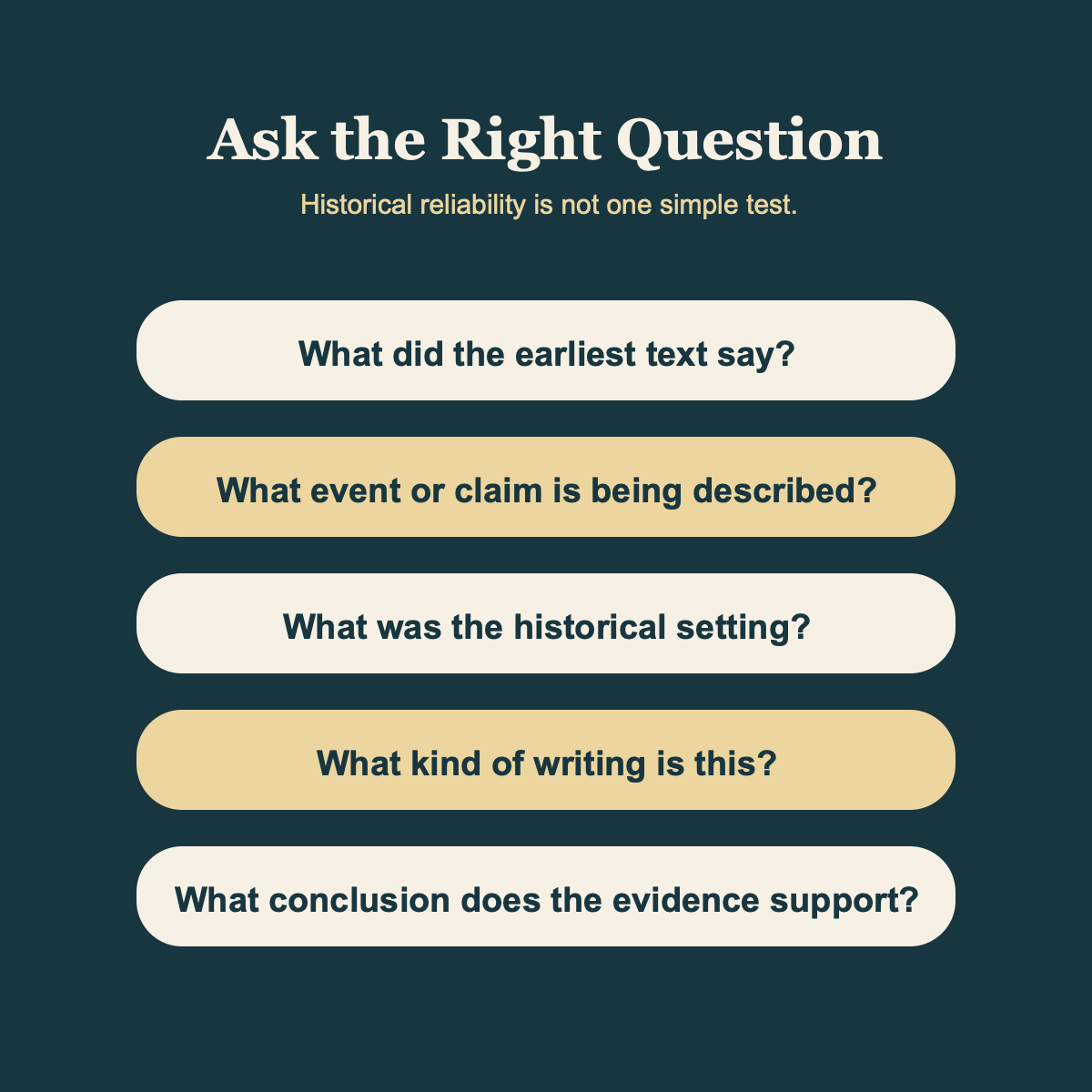
When someone asks whether the Bible is historically reliable, they may mean several things: Was this text copied accurately enough for us to know what earlier copies said? Does it describe real places, people, customs, and political settings? Does a particular narrative present events in a historically responsible way? What kind of writing is this? What does the Bible itself claim about God, Israel, Jesus, and the world?
Those questions belong together, but they are not identical. A map, an inscription, a manuscript, a Gospel, and a psalm each need to be read according to what they are.
The Bible’s own historical posture
The Bible repeatedly places its message in the public world. It names families, rulers, cities, journeys, conflicts, worship practices, and covenant events. Luke begins his Gospel by referring to earlier accounts, careful investigation, and an orderly account for his reader (Luke 1:1–4). That does not turn the Gospel into a modern textbook. It does show that Luke presents the story of Jesus as something that happened in history and deserves careful testimony.
How the text was transmitted
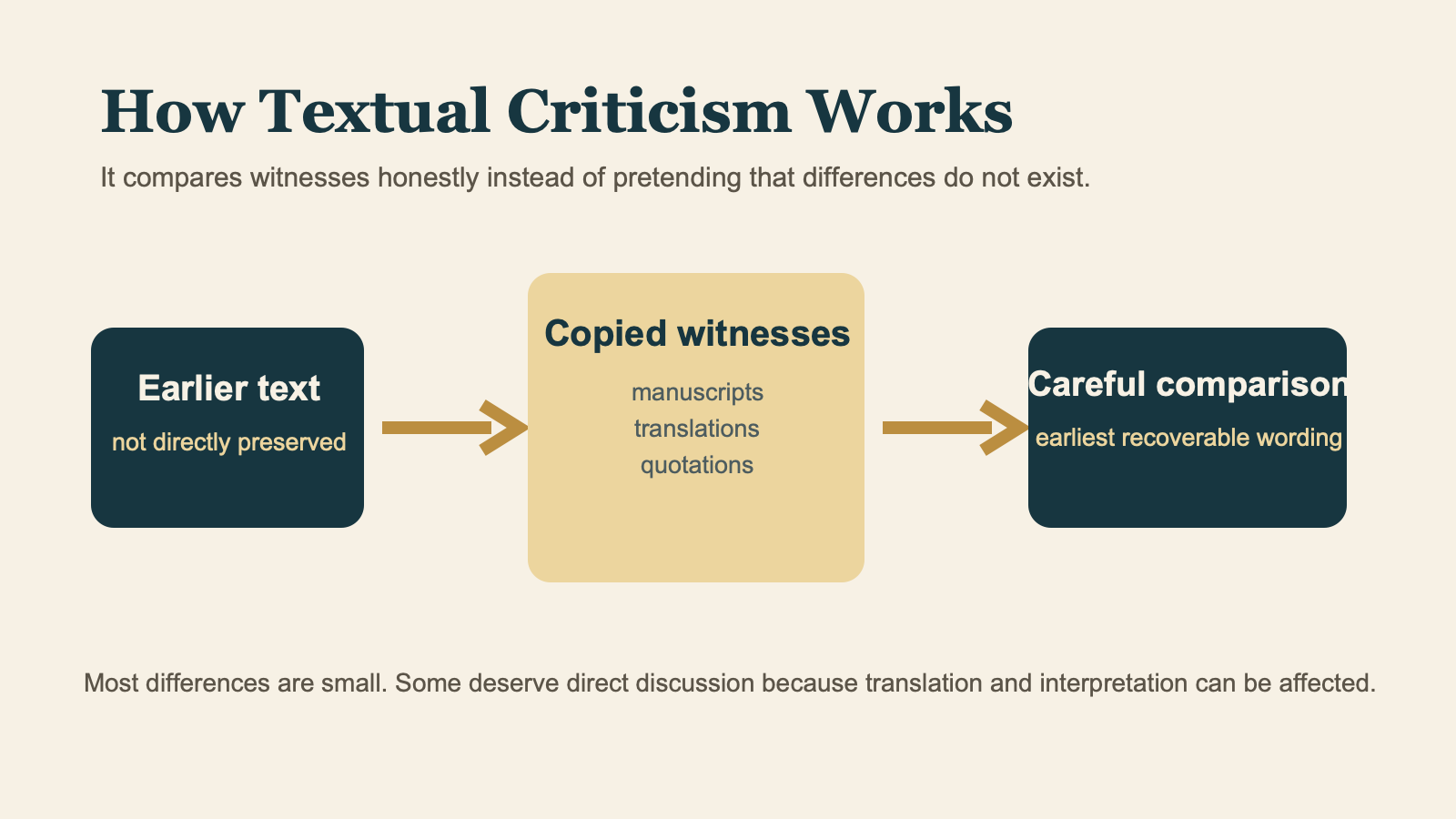
No original biblical manuscript survives. What we have are copies, translations, quotations, and other witnesses from different places and periods. Textual criticism compares those witnesses to understand the earliest recoverable wording. Most differences involve spelling, word order, or other small copying variations. Some differences deserve more discussion because they affect how a passage is translated or interpreted.
What the Dead Sea Scrolls show
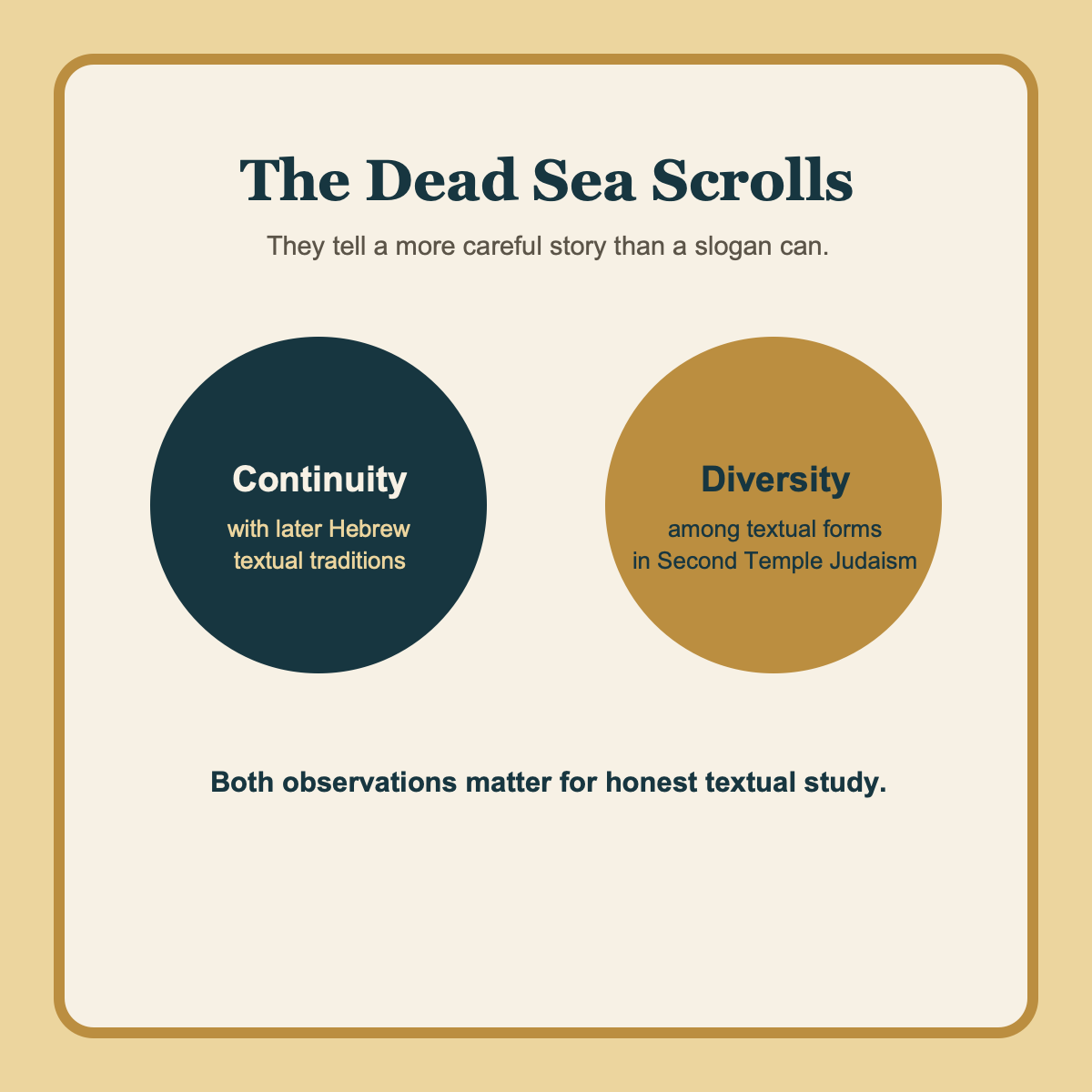
The Dead Sea Scrolls show meaningful continuity with later Hebrew textual traditions, but they also show that more than one textual form could circulate in Second Temple Judaism. They do not give us permission to say that every biblical text came down through history without variation. They do show that the Bible’s textual history can be studied with real evidence rather than slogans.
What archaeology can—and cannot—do
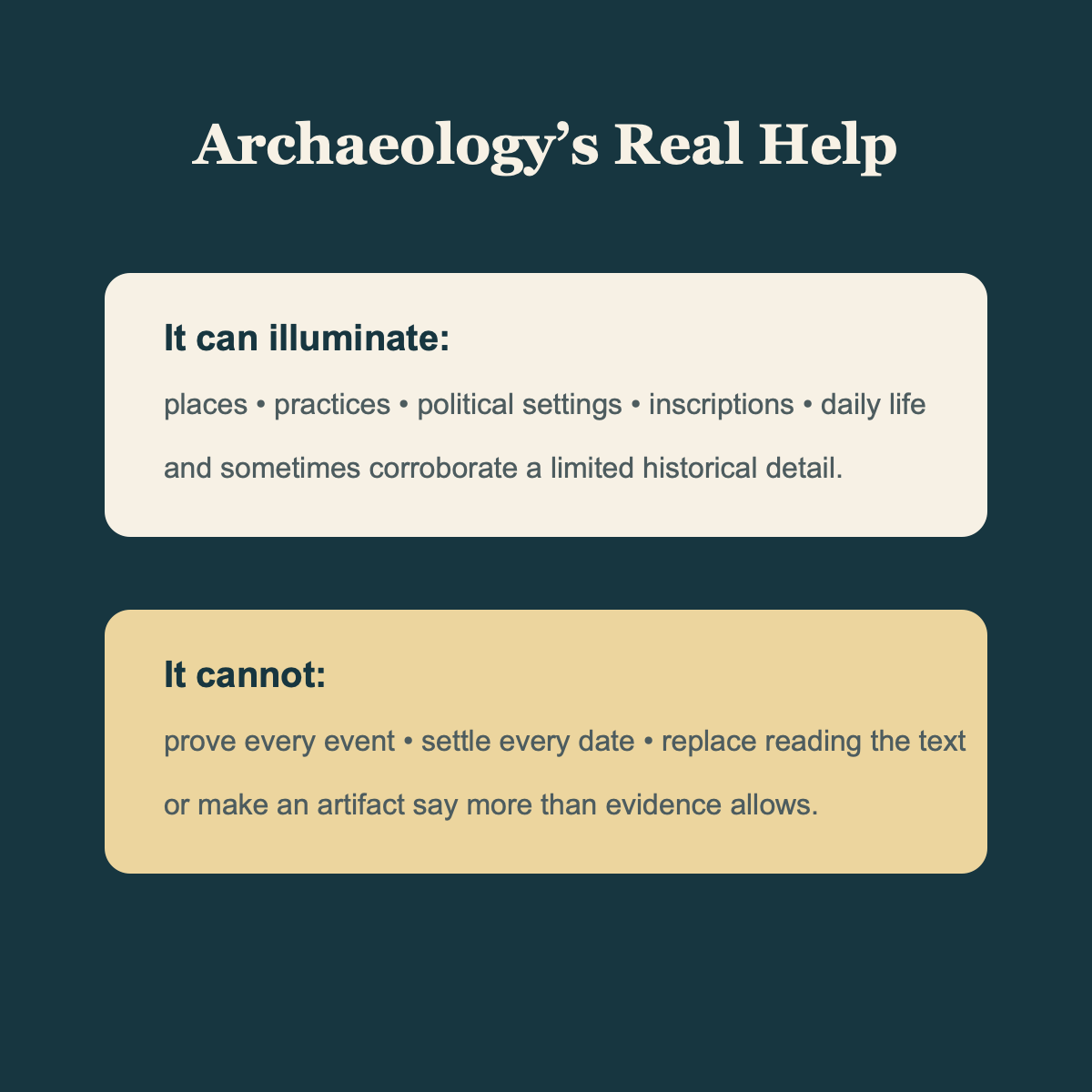
Archaeology can illuminate the settings in which biblical people lived. Inscriptions, buildings, roads, pottery, coins, seals, cities, and burial practices help us understand language, political power, commerce, worship, and daily life. Sometimes an archaeological discovery can corroborate a name, place, title, or cultural practice mentioned in the Bible.
But archaeology does not function like a machine that proves every event. Absence of evidence is not automatically evidence that something never happened, especially when the physical record is incomplete. An artifact must not be made to say more than it can.
Why the Gospels deserve focused attention
The Gospels make claims about Jesus of Nazareth: His teaching, healing, death, resurrection, relationships, conflict, and identity. Those claims deserve their own historical questions. Christians do not need to hide those questions. The earliest Christian proclamation was not merely that Jesus taught timeless ideas. It was that God acted in and through Jesus in history.
Unity without flattening the Bible
The Bible contains many books, genres, human authors, historical settings, and literary voices. It should not be made to sound like one flat document. Yet Christians also read it as a coherent canon: the story of creation, covenant, Israel, promise, Jesus, the nations, and new creation.
A confidence that can face questions
There are good reasons to take the Bible seriously. Its texts have a substantial and examinable manuscript history. Its world can be investigated through geography, language, ancient writings, and archaeology. Its central claims invite public historical questions rather than private escape from them.
Mature confidence is not built by ignoring complexity. It is built by reading carefully, weighing evidence honestly, and letting Scripture speak in its own voice. For Christians, that careful reading leads us toward Jesus.
Sources and limits
Primary Scripture anchor: Luke 1:1–4. Historical background was checked in Logos through Textual Criticism of the Bible, Revised Edition, section 3.2.3.a, and the Lexham Bible Dictionary entry “The Dead Sea Scrolls.” These sources support both meaningful continuity and real textual diversity among the Dead Sea Scrolls. No single manuscript, archaeological discovery, or textual statistic proves every biblical claim.