Jesus did not step into a blank religious landscape. He was born, taught, prayed, read Scripture, and went up to Jerusalem as a Jew within the richly varied world of Second Temple Judaism. Learning that world does not explain Jesus away. It helps us hear the Gospels with greater care.
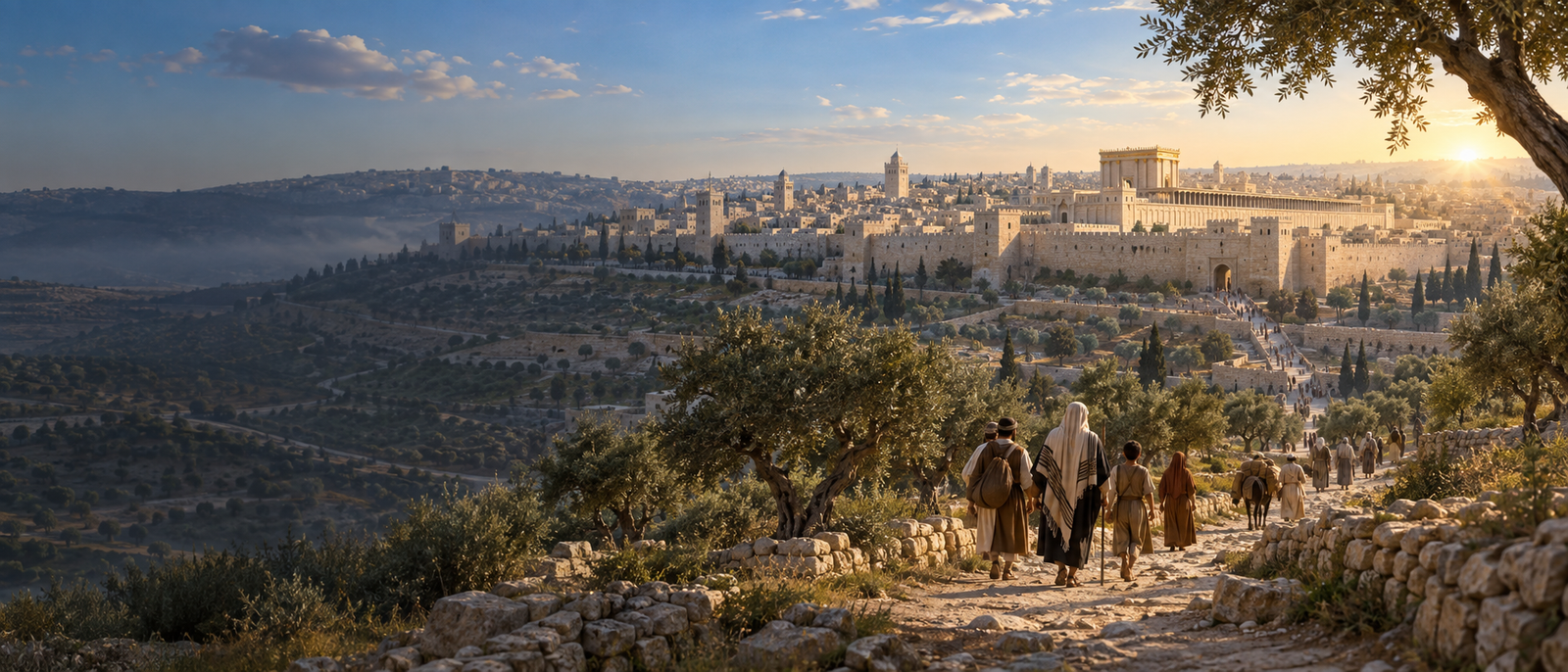
The phrase Second Temple period commonly refers to the centuries from the return from Babylonian exile and the rebuilding of the Temple in Jerusalem to the Temple’s destruction by Rome in AD 70. The Persian return began under Cyrus in the late sixth century BC, while the rebuilt Temple was completed later.
Why this period matters
The New Testament belongs inside this Jewish story. The Law and the Prophets were Israel’s Scriptures, read and debated in real communities. The Temple was a place of pilgrimage, worship, sacrifice, prayer, teaching, and public life.
Return, rebuilding, and renewed worship
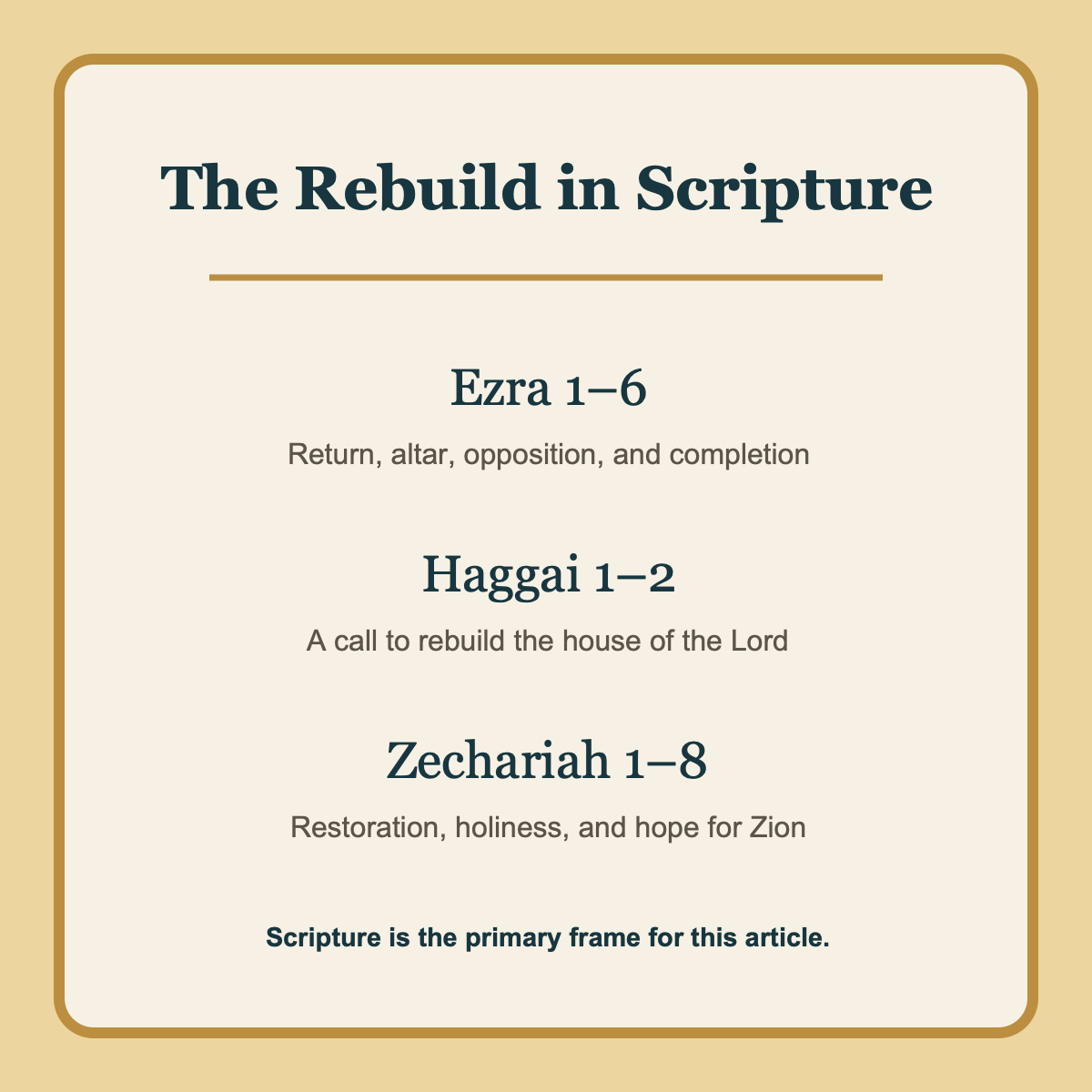
Ezra describes Cyrus of Persia permitting Jewish exiles to return to Jerusalem and rebuild the house of the Lord (Ezra 1). The returned community first restored the altar and renewed the appointed worship before the Temple itself was completed (Ezra 3). The work faced opposition and delay (Ezra 4), then resumed in the days of Haggai and Zechariah (Ezra 5–6; Haggai 1–2; Zechariah 1–8).
The rebuilding project was not simply an architectural achievement. It was a covenantal act of worship and communal restoration. The Temple stood at the heart of Jewish life in Jerusalem throughout this era, including in the lifetime of Jesus.
A Jewish world wider than one setting
Second Temple Judaism was centered in Jerusalem, but it was not confined there. Jewish communities lived in Judea, Galilee, and across the wider Mediterranean and Near Eastern world. Many people made pilgrimage to Jerusalem; many also encountered Scripture, prayer, teaching, and communal life in local settings.
Nehemiah 8–10 portrays public reading, explanation, confession, and covenant renewal. It should not be used to flatten the whole period into a later model of Judaism. It does show that Scripture and communal instruction were vital parts of Israel’s restored life.
Empires, pressure, and hope
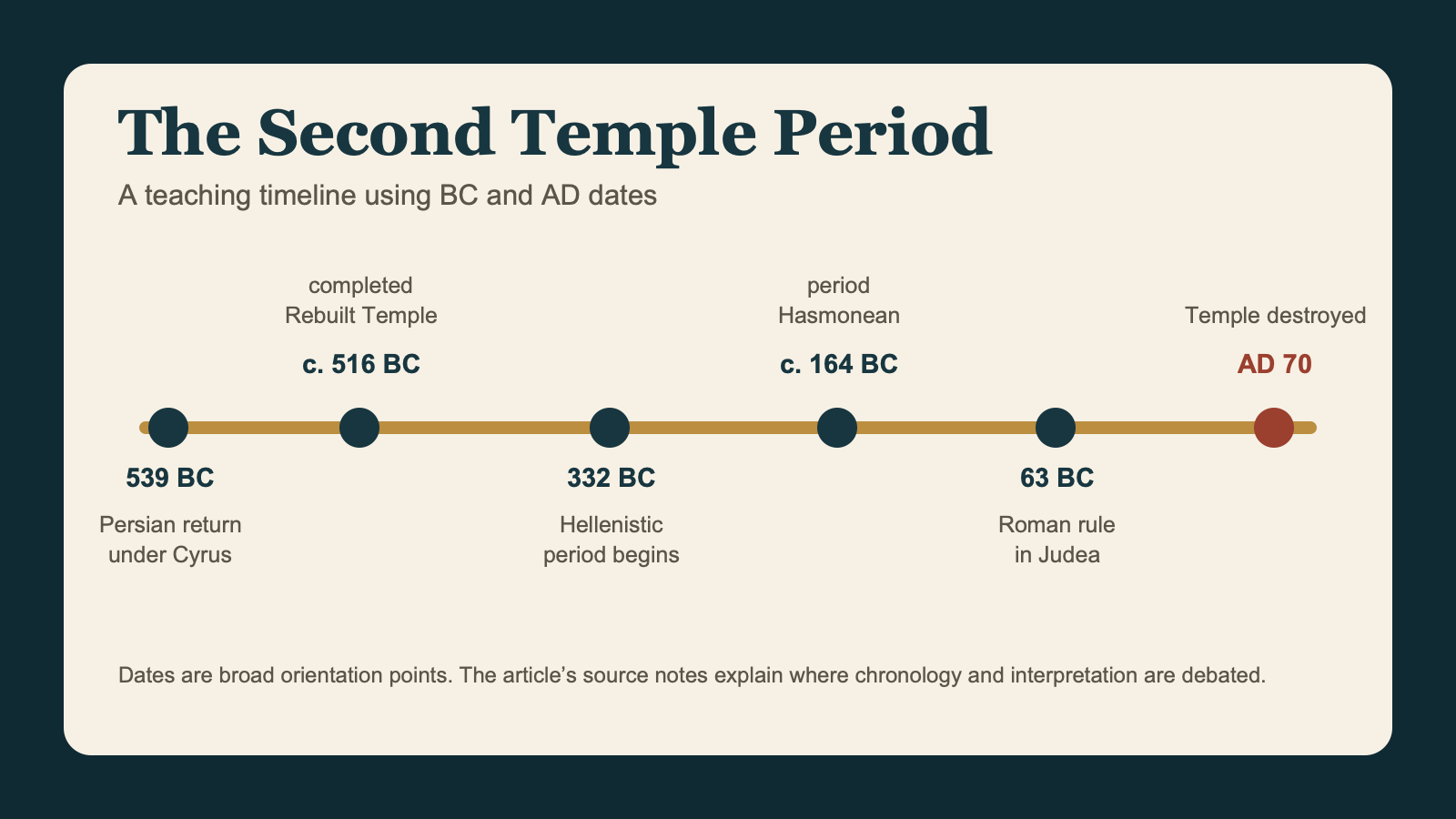
- Persian period: Return from Babylon and rebuilding in Jerusalem.
- Hellenistic period: Greek-speaking empires ruled the region after Alexander.
- Hasmonean period: A Jewish dynasty ruled after the Maccabean revolt.
- Roman period: Rome controlled Judea and Galilee in the time of Jesus, ending with the Temple’s destruction in AD 70.
Many groups, real disagreements, limited evidence
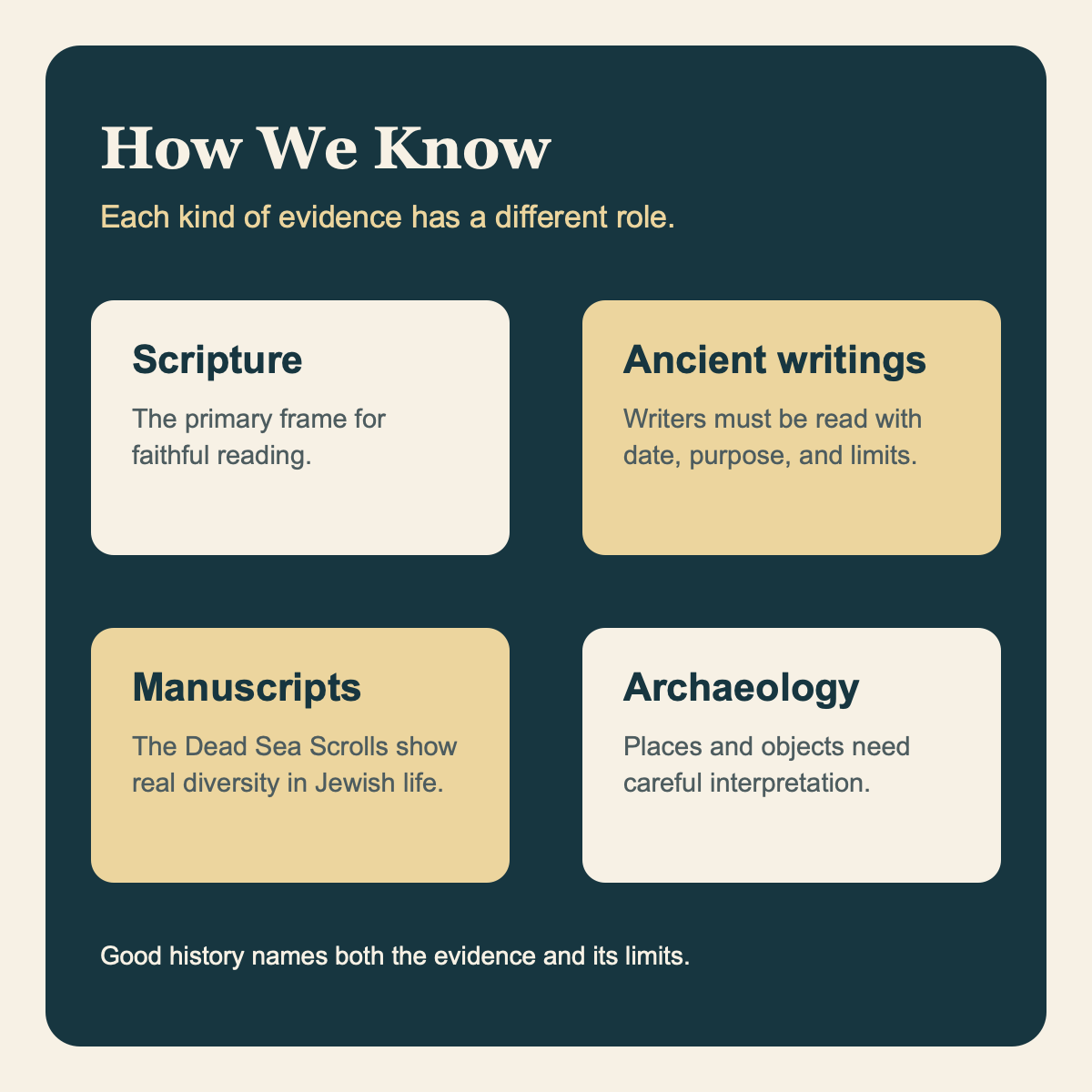
Ancient sources refer to Pharisees, Sadducees, Essenes, and other movements or parties. These names are important, but they need to be handled carefully. Our evidence comes from different sources—Josephus, the New Testament, the Dead Sea Scrolls, archaeology, and later rabbinic literature. Those sources do not all speak from the same place, date, or purpose.
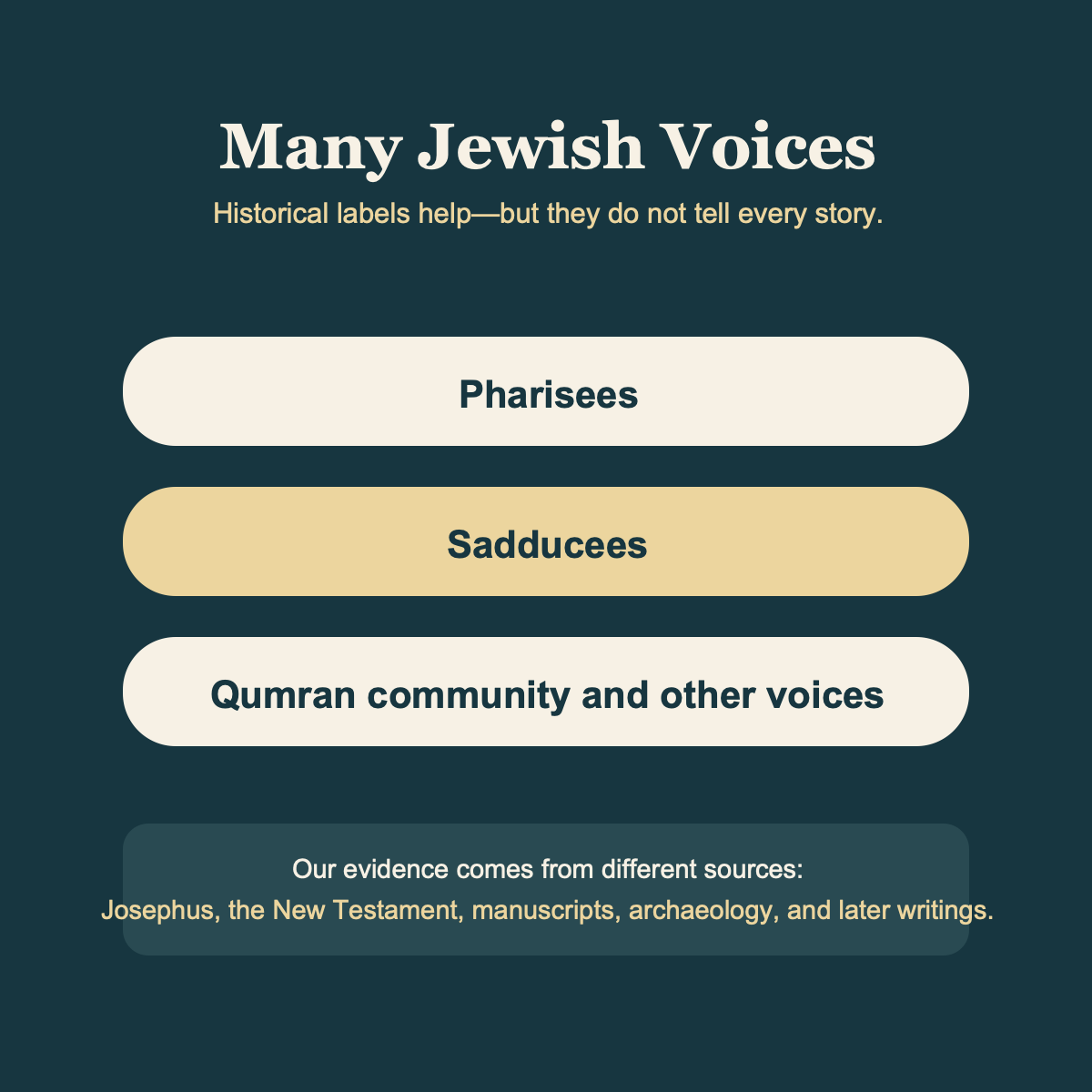
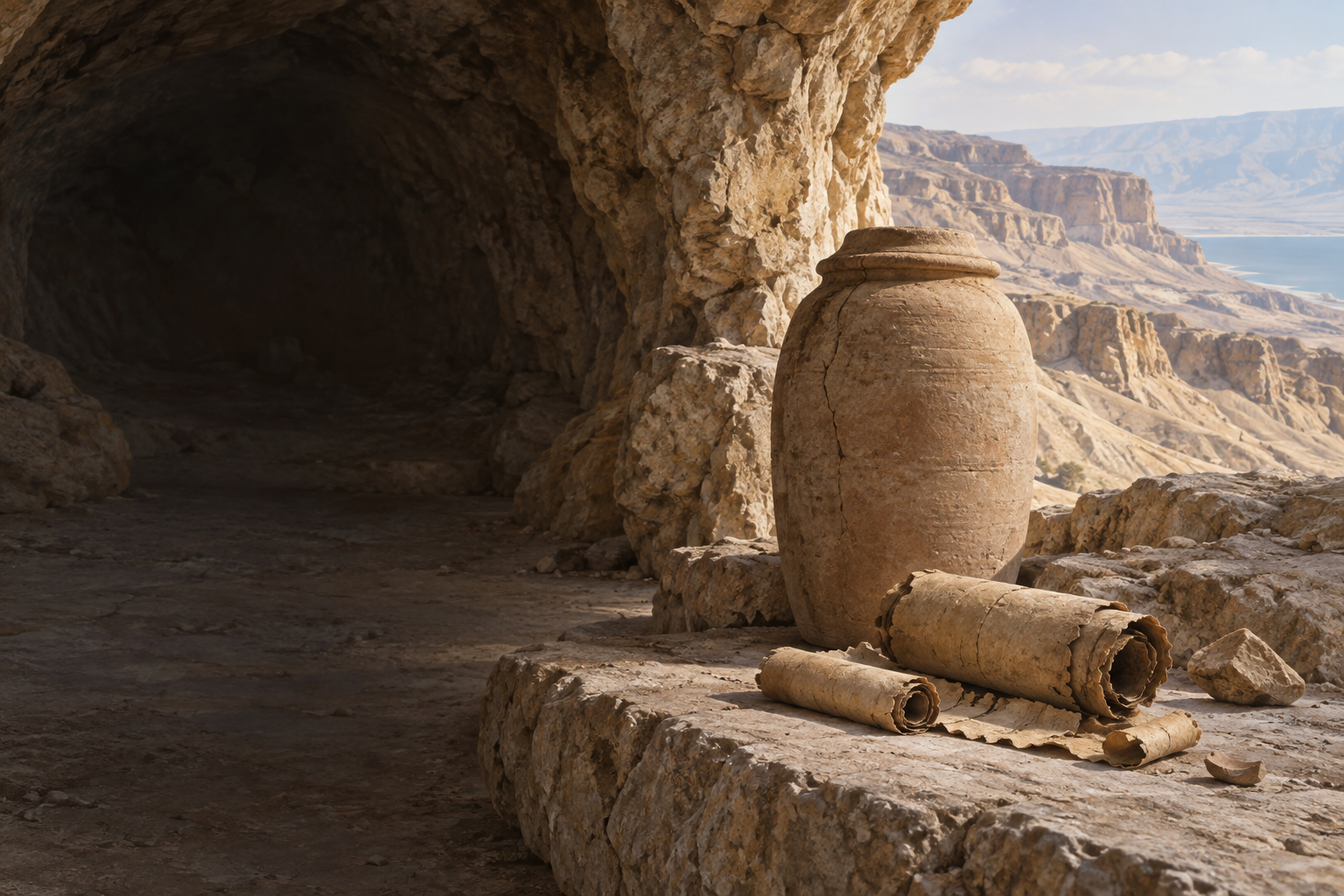
The Qumran community and the Dead Sea Scrolls are especially important for understanding the diversity of Jewish thought and practice. Many scholars connect Qumran with the Essenes, but that identification remains a leading interpretation rather than an unquestioned fact. We should not claim that Jesus belonged to that community or had direct contact with it without evidence.
Jesus within his Jewish world
The Gospels present Jesus teaching in synagogues, going up to Jerusalem for festivals, discussing Scripture, and engaging serious questions about holiness, the kingdom of God, the Torah, the Temple, prayer, and the life of Israel. Luke shows Him teaching in a synagogue in Nazareth (Luke 4:16–21). John places Him in the Temple during major feasts (John 2:13–22; 10:22–23).
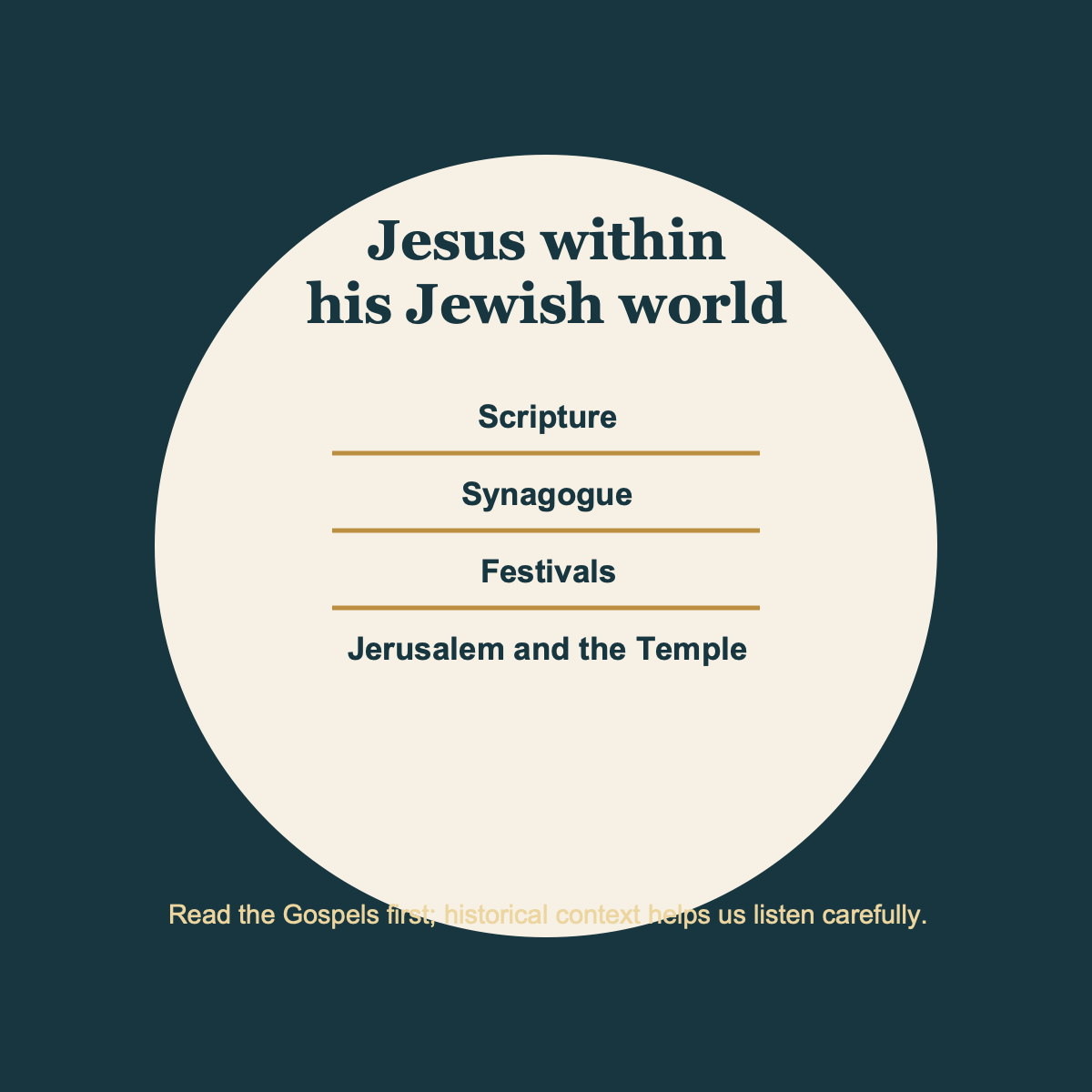
Jesus did not fit neatly into a modern chart of ancient groups. The Gospels must lead our description of Him. Their disagreements with particular leaders are real, but they are Jewish arguments within a Jewish world. They must never be used to make careless claims about Jewish people as a whole.
After AD 70: loss, continuity, and new paths
Rome destroyed the Jerusalem Temple in AD 70. That catastrophe changed Jewish life profoundly. Jewish communities continued to read Scripture, pray, teach, gather, and preserve their identity. It is too simple to say that rabbinic Judaism and Christianity emerged as two ready-made, parallel successors the moment the Temple fell. The developments were long, complex, and lived out differently in different places.
Sources and limits
Primary biblical passages for this guide: Ezra 1; 3–6; Haggai 1–2; Zechariah 1–8; Nehemiah 8–10; Luke 4; John 2; John 10:22–23. Historical background was checked in Logos through the Lexham Bible Dictionary, the Evangelical Dictionary of Biblical Theology, the Anchor Yale Bible volume Haggai, Zechariah 1–8 by Carol L. Meyers and Eric M. Meyers, and a Dictionary of New Testament Background entry identifying Josephus as a first-century historian for the AD 70 context.
A biblical passage, archaeological discovery, ancient writing, and later source each need to be identified for what they are. Where the evidence remains debated, this guide names the limit instead of presenting an interpretation as settled fact.