Click to listen: How Do We Live When Death Comes to Everyone? | Ecclesiastes 9–12
We cannot control what tomorrow will bring, but Ecclesiastes still gives you and us a faithful way to live today.
The closing chapters of Ecclesiastes do not offer easy answers. Death comes to everyone. Skill does not guarantee success. Wisdom may be ignored or forgotten. Foolishness can gain power. Age steadily narrows our strength. The Teacher lets these realities remain difficult because faithful living begins with truth, not denial.
Yet this is not a lesson in giving up. Ecclesiastes 9-12 repeatedly calls us back into life.
Receive the gifts in front of you
Ecclesiastes tells us to eat with joy, receive the companionship God gives, and work wholeheartedly while we have the opportunity. These ordinary gifts are not distractions from a serious life. They are part of the life God has given us to receive.
That matters because fear can make us postpone living. We tell ourselves that we will act when the outcome is secure, love when the risk is gone, or give thanks when every uncertainty has been resolved. Ecclesiastes will not let us wait for a control we were never promised.
Act faithfully without guarantees
The swift do not always win the race, the strong do not always win the battle, and the wise are not always rewarded as they deserve. Ecclesiastes is honest about the limits of skill and planning.
But uncertainty is not permission to become passive. The Teacher still tells us to sow, to give, to work, and to act. Faithfulness is not a technique for forcing a result. It is the right response to God even when the result remains beyond us.
This is one of the book’s most practical gifts: you do not need complete knowledge of tomorrow before taking the next faithful step today.
Resist the quiet spread of folly
Ecclesiastes also shows how a little folly can outweigh much wisdom. Careless speech, poor leadership, laziness, and unmanaged desire can damage more than we expect. Wisdom does not make us sovereign over life, but it still helps us walk through life with greater honesty and care.
The question is not whether wisdom can remove every risk. It cannot. The question is whether we will listen to wisdom when noise, power, or immediate appetite seems more impressive.
Remember your Creator
The final movement turns toward youth, aging, and remembrance. Remember your Creator is not a gloomy command to stop enjoying life. It is an invitation to live our years in their proper relationship to the One who gave them.
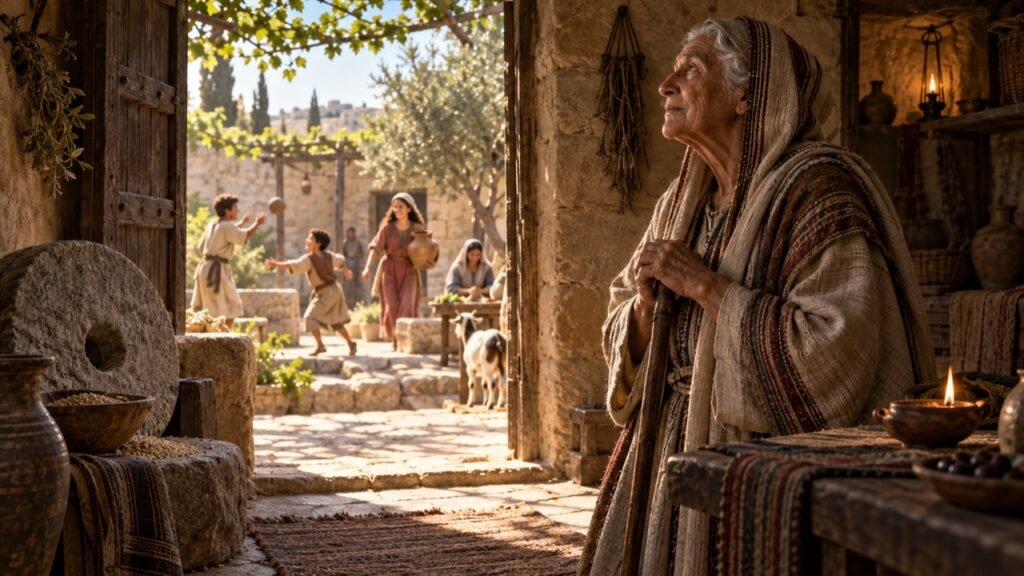
The poem of aging in Ecclesiastes 12 is tender and unsparing. Strength fades. Familiar abilities narrow. The body returns to dust. Remembering our Creator now keeps us from treating life as though it belongs entirely to us.
Live in light of judgment and hope
Ecclesiastes closes by calling us to fear God, keep His commandments, and remember that every deed comes into judgment. The book itself ends with accountability before God; it does not fully unfold the later biblical teaching about resurrection.
When we read within the wider canon, Jesus’ words at Lazarus’s tomb and Paul’s teaching in 1 Corinthians 15 bring resurrection hope into view. We should keep those settings distinct. Ecclesiastes teaches us to live faithfully within mortal limits. The New Testament announces that death will not have the final word because of Jesus.
Read it for yourself
As you read Ecclesiastes 9:1-12:14, notice every place the Teacher tells us to act even though we cannot know the outcome:
- Ecclesiastes 9:1-10 – receive life’s gifts and do the work before you.
- Ecclesiastes 9:11-18 – skill matters, but it cannot guarantee recognition or success.
- Ecclesiastes 10 – resist folly in speech, work, and leadership.
- Ecclesiastes 11 – give, sow, and act without demanding certainty.
- Ecclesiastes 12 – remember your Creator and live accountable to Him.
Where are you tempted to postpone faithful action until you have certainty God never promised?
Click to listen: How Do We Live When Death Comes to Everyone? | Ecclesiastes 9–12
Reading notes and qualifications
- The dead know nothing. This concerns ended participation in the observed life under the sun. It is not used here as a complete doctrine of resurrection or the intermediate state.
- God has already approved your works. Ecclesiastes 9:7 commends the ordinary enjoyments named in 9:7-10. It is not universal approval of every action or a doctrine of merit.
- Time and chance. The phrase names the unpredictability of outcomes from the human vantage point. It does not remove the Creator, providence, or judgment from the book.
- The poor wise man. He most likely rescued the city, but the text does not tell us how. We do not invent the missing civic details.
- Bread on the waters and seven or eight portions. These sayings have credible generosity, commerce, and risk-distribution readings. Their secure ethical center is diligent and openhanded action under uncertainty, not a guaranteed return.
- The aging poem. Its images are not treated as a rigid anatomical code. They honor the seriousness of declining capacity and death without reducing older people to decline.
- One Shepherd. Several responsible interpretations remain possible. We preserve the phrase and its authority claim without forcing it into a direct prediction of Jesus.
- Fear God and obey. Fear of God and obedience are inseparable in the epilogue, but obedience is not presented as a purchase price for salvation.
Scripture and sources
Unless otherwise noted, Scripture quotations are from the Holy Bible, Berean Standard Bible (BSB), third printing. The BSB text is dedicated to the public domain. berean.bible
Primary passage: Ecclesiastes 9:1-12:14.
Canonical conversation: Genesis 2:7; Genesis 3:19; Deuteronomy 6:1-9; Deuteronomy 17:14-20; Psalm 90:1-17; Proverbs 1:1-7; Daniel 7:13-14; Matthew 20:25-28; John 5:24-29; John 11:17-27; 1 Corinthians 1:18-31; 1 Corinthians 15:12-58; Hebrews 9:27-28; Revelation 20:11-15.
- Garrett, Duane A. Proverbs, Ecclesiastes, Song of Songs. New American Commentary 14. Nashville: Broadman & Holman, 1993. Ecclesiastes 8:9-12:14.
- Ogden, Graham S., and Lynell Zogbo. A Handbook on Ecclesiastes. UBS Handbook Series. New York: United Bible Societies, 1998. Ecclesiastes 9:1-12:14.
All our teaching remains free. Support Modern Mind, Ancient Book (voluntary): https://ko-fi.com/modernmindancientbook