
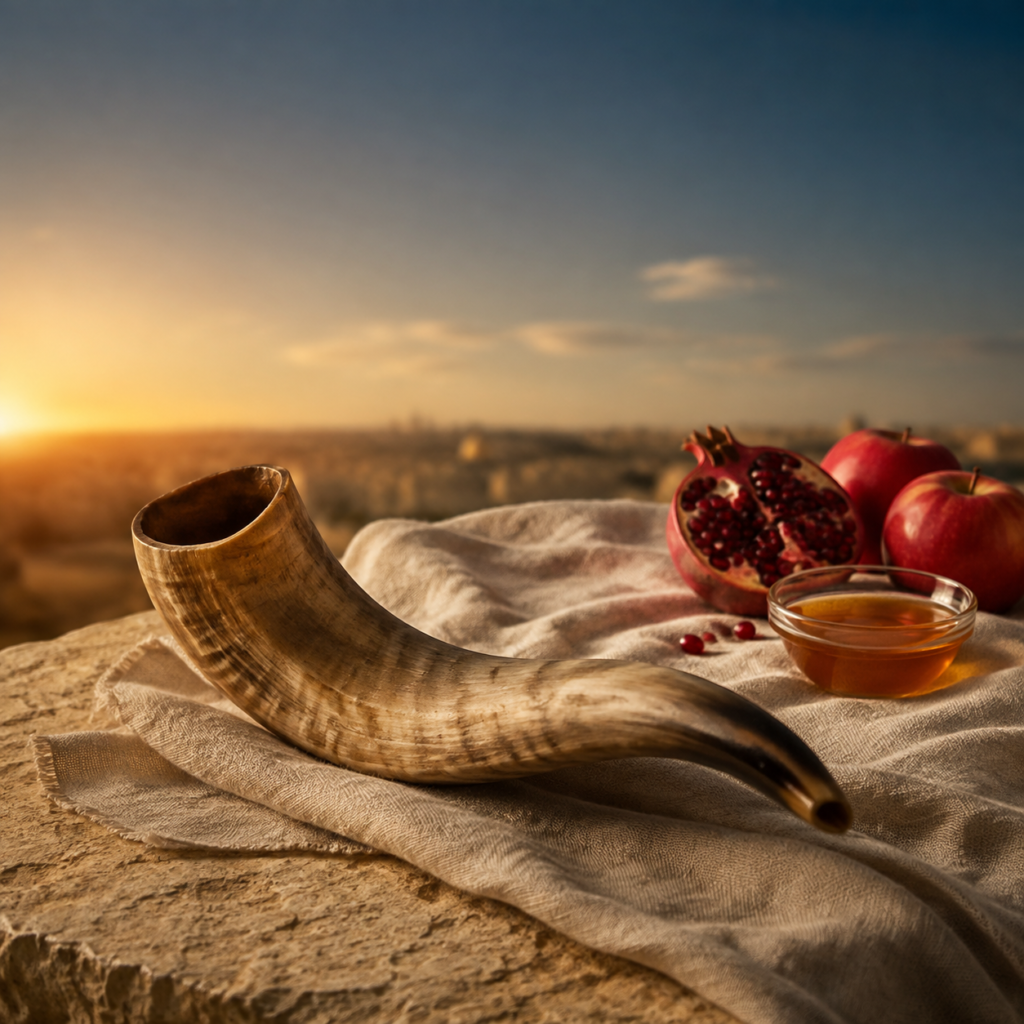
A Practical Guide to the Fall Appointed Times
How to celebrate at home and with friends: complete gathering plans, recipes, prayers, readings, and cultural windows for 2026.
You do not have to know Hebrew.
You do not need an elaborate ceremony.
You do not need to pretend to be something you are not.
You need a Bible, a willing heart, a little time, and a desire to meet the God who appointed these days.
The biblical fall appointed times form a journey:
The trumpet sounds. The heart awakens. We examine ourselves. We repent. We repair what we have broken. We seek reconciliation. We come humbly before God on the Day of Atonement. Then, five days later, we go outside and rejoice.
This guide will help you begin simply and host confidently. It tells you what Scripture says, identifies later Jewish traditions as traditions, gives you complete gathering plans, original prayers, simple recipes, shopping lists, readings for adults and children, and practical ways to participate without turning the feasts into a test of salvation.
The whole journey: HEAR THE TRUMPET -> RETURN TO GOD -> DRAW NEAR -> REJOICE AND DWELL
The 2026 calendar
The dates below follow the standard fixed Hebrew calendar. A biblical day begins in the evening, so each appointed time starts at sunset on the civil date shown.
| Appointed time | Hebrew date | Begins | Ends or continues through |
|---|---|---|---|
| Yom Teruah / Rosh Hashanah | 1 Tishrei 5787 | Friday, September 11 at sunset | The Torah’s first day is Saturday, September 12. Traditional Diaspora Judaism observes Rosh Hashanah through Sunday nightfall. |
| Yom Kippur | 10 Tishrei 5787 | Sunday, September 20 at sunset | Monday, September 21 at nightfall |
| Sukkot | 15-21 Tishrei 5787 | Friday, September 25 at sunset | Friday, October 2 at nightfall |
The dates are independently confirmed by Hebcal’s 2026 Jewish holiday calendar.
These Gregorian dates change every year. The Hebrew calendar is lunisolar: its months follow lunar cycles, while leap months keep the festivals aligned with the agricultural seasons of the solar year. Because that calendar does not map onto the Gregorian calendar in the same way each year, Yom Teruah, Yom Kippur, and Sukkot appear on different Gregorian dates from year to year. Always use the schedule for the year you are observing.
Choose your starting level
You do not have to do everything in this guide. Choose the level that allows you to be present rather than anxious.
| Level | What you do | Approximate time |
|---|---|---|
| Open the door | Read the central Torah passage, pray, and share one symbolic food or simple meal. | 20-30 minutes |
| Gather the table | Use the full home gathering plan, invite one or two people, and prepare one recipe card. | 60-90 minutes |
| Keep the rhythm | Observe the whole season: Yom Teruah, a daily returning practice, Yom Kippur, and several Sukkot meals. | Ten days plus the seven days of Sukkot |
The host’s four jobs
- Prepare the room. Make it peaceful, safe, and welcoming. A clean table, enough chairs, water, and a visible Bible are more important than elaborate decorations.
- Name each practice truthfully. Say whether it comes from Scripture, a later Jewish tradition, your congregation, or this MMAB guide.
- Keep everyone involved. Give short readings to guests. Let children ask questions. Invite participation without pressuring anyone to pray, fast, or disclose private sins.
- Protect the invitation. A guest is not attending an exam. Explain unfamiliar words, avoid insider language, and leave room for curiosity.
A simple invitation to send
We are learning to experience the biblical fall appointed times, not merely read about them. Please join us for Scripture, a simple meal, conversation, and prayer. You do not need prior knowledge, special clothing, or a Hebrew vocabulary. Come as a friend, bring your questions, and help us remember and enjoy.
What to gather once for the whole season
- A Bible for the host and printed references for guests.
- A notebook or shared household journal.
- A simple tablecloth, candles only if you can use them safely, and nonflammable lighting for an outdoor space.
- Apples, honey, dates, pomegranate, grape juice or wine, bread, seasonal vegetables, rice, lentils, broth, herbs, and foods appropriate for your guests.
- A shofar if your household or congregation uses one. A recording can teach the sound, but it is not presented as fulfilling the traditional mitzvah.
- Materials for a sukkah or a plan to visit one. Do not build beneath power lines, block an exit, or use combustible roofing near flame.
- A guest list that includes at least one person who might otherwise be left outside the celebration.
Hospitality and food safety
Ask about allergies, dietary needs, and alcohol preferences before planning the menu. Label dishes that contain nuts, dairy, eggs, gluten, sesame, or meat. Keep hot food hot and cold food cold. Refrigerate leftovers promptly. If you are serving Jewish guests who keep kosher, ask them what accommodation they need; do not assume that an ingredient list alone makes a kitchen or meal kosher.
All recipes below are original MMAB teaching-guide recipes unless a source is specifically named. They are invitations for the table, not ritual requirements and not claims that every Jewish community eats the same foods.
Before we begin: command, tradition, and invitation
The Torah gives Israel appointed times. Jewish communities have also received, developed, and preserved beautiful ways of keeping them across many centuries and cultures. Those two things belong in the same conversation, but they are not the same category.
In this guide:
- Scripture appoints means the instruction is in the biblical text.
- Jewish tradition means a later practice carried by a named Jewish community or stream.
- A simple way to begin means an MMAB invitation, not a new command and not a claim that someone from the nations becomes Israel by participating.
We honor tradition by naming it truthfully. We honor Scripture by refusing to call every cherished custom a Torah command. We honor Jesus by keeping Him inside Israel’s covenant story and festival world.
The goal is not to earn God’s love. The goal is to recover the biblical setting, learn the rhythm God gave Israel, understand Jesus more clearly, and turn our hearts toward God.
Yom Teruah: Wake Up
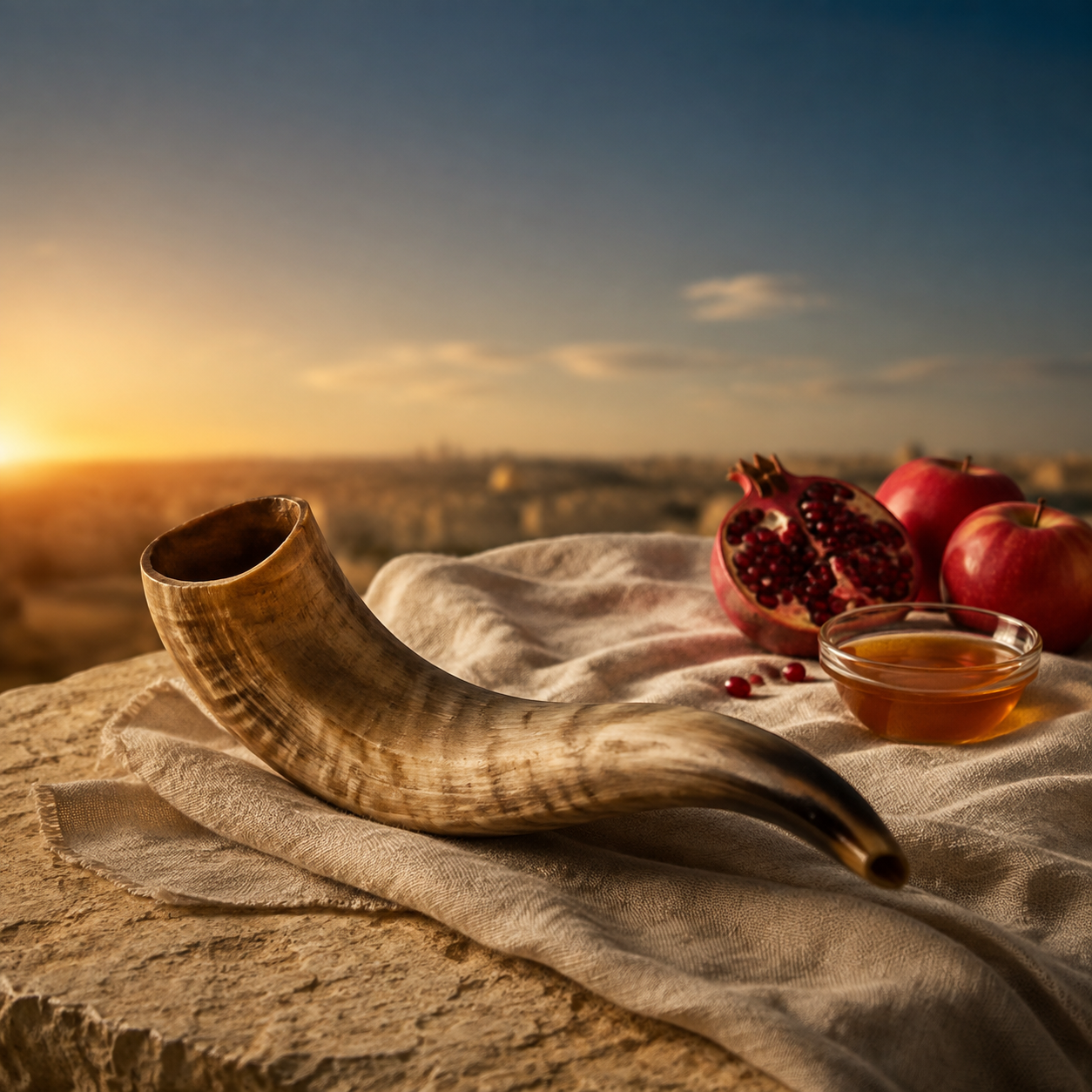
Begins Friday, September 11, 2026 at sunset. The first day of the seventh month is Saturday, September 12.
The Torah does not call this day “Jewish New Year.” It calls the first day of the seventh month a memorial of trumpet blasts, a sacred assembly, and a day when ordinary work stops. Read Leviticus 23:23-25 and Numbers 29:1-6.
The biblical message is simple:
Wake up.
The trumpet interrupts ordinary life. God placed an appointed time on the calendar. Pay attention. Examine your heart. Turn toward Him.
Read
- Leviticus 23:23-25
- Numbers 29:1-6
- Psalm 47
- Psalm 81:1-4
- Psalm 98:4-9
For the New Testament trumpet horizon, read:
- Matthew 24:29-31
- 1 Corinthians 15:50-52
- 1 Thessalonians 4:13-18
- Revelation 11:15
Do not begin by turning Yom Teruah into a prophecy chart. The first lesson is simpler: wake up.
Yom Teruah and Rosh Hashanah
In later Jewish life, 1 Tishrei became Rosh Hashanah, the civil new year, with a two-day observance and many beloved customs. Apples and honey, festive greetings, prayers about kingship and judgment, and the language of a year being written and sealed belong to that developed tradition. They can be appreciated without being presented as commands in Leviticus 23.
In 2026, 1 Tishrei falls on Shabbat. The Mishnah records the rabbinic rule that the shofar was sounded in the Temple on such a day but not generally outside it; after the Temple’s destruction, a limited court-centered exception was instituted. That is why traditional rabbinic communities sound the shofar on Sunday in 2026. See Mishnah Rosh Hashanah 4:1. This is a later rabbinic practice, not an exception stated in Leviticus 23.
A simple way to begin at home
Shortly before sunset:
- Gather the household.
- Turn off unnecessary distractions.
- Place a Bible on the table.
- Light candles if desired. Candle lighting is a beautiful Jewish tradition, not a Torah requirement.
- Read Leviticus 23:23-25 aloud.
- Pray.
- Sound a shofar if one is available, following the practice your household or community has chosen.
- Let everyone listen. Let children try it.
- Sit silently for a moment afterward.
The point is not musical skill. The sound is supposed to get your attention.
A 75-minute Yom Teruah gathering
Before guests arrive: Put the apples-and-honey board on the table. Set out the Bible, cups, napkins, and a bowl of water. Place the shofar where everyone can see it. If you are observing the rabbinic Shabbat restriction in 2026, explain that the shofar will be heard the following day rather than sounded on Shabbat.
| Minutes | What the host does |
|---|---|
| 0-10: Welcome | Greet everyone. Explain that the evening begins a biblical journey from awakening to repentance, atonement, and joy. |
| 10-20: Read | Ask two readers to share Leviticus 23:23-25 and Psalm 81:1-4. |
| 20-30: Explain | Name the Torah command, the later Rosh Hashanah customs, and the choice your household is making about shofar on Shabbat. |
| 30-40: Hear | Sound the shofar if appropriate, or listen to it the next day. Sit quietly for one full minute. |
| 40-55: Respond | Give each person a card. Ask: “What in my life needs to wake up?” No one has to read an answer aloud. |
| 55-70: Eat | Share the symbolic foods and one ordinary meal. Explain the food traditions without pretending they are commands. |
| 70-75: Pray | Read the MMAB prayer below and send everyone home with the Ten Days practice. |
Recipe card: Apples, honey, dates, and pomegranate board
Serves 6-8 | 15 minutes | No cooking
Gather: 4 crisp apples, 1 lemon, 1/2 cup honey, 12 Medjool dates, seeds from 1 pomegranate, and optional round challah or other bread. For children under one year, never serve honey.
- Wash and slice the apples. Toss them lightly with lemon juice to slow browning.
- Place honey in a small bowl at the center of a platter.
- Arrange apples, dates, and pomegranate seeds around it. Keep the pomegranate in its own cup if staining is a concern.
- If using bread, place it on a separate board and identify gluten clearly.
- Before eating, say: “These foods are later Jewish signs of hope and sweetness. They help us put our hopes into words; they are not commanded in Leviticus 23.”
Conversation prompt: What kind of goodness do you hope to practice, not merely receive, in the coming year?
Recipe card: Date, orange, and pomegranate salad
Serves 6 | 20 minutes | Vegan and gluten-free
Gather: 4 oranges, 8 pitted Medjool dates, seeds from 1 pomegranate, 2 tablespoons olive oil, 1 tablespoon lemon juice, a pinch of salt, 2 tablespoons chopped mint or parsley, and optional toasted pistachios served separately.
- Peel the oranges and slice them into bite-size pieces.
- Slice the dates thinly and combine them with the oranges and pomegranate.
- Whisk olive oil, lemon juice, and salt. Toss gently with the fruit.
- Add the herbs immediately before serving. Offer nuts separately and label them.
This MMAB recipe is inspired by foods found on many Sephardi and Mizrahi symbolic tables. A Sephardic Rosh Hashanah seder may include dates, beans, leeks, beets, gourds, pomegranate, and other foods whose names or qualities carry a prayerful association. The exact foods and words vary by community.
Cultural windows: one season, many tables
There is no single worldwide “Rosh Hashanah menu.”
- In many Ashkenazi communities, apples or bread dipped in honey, round challah, tzimmes, honey cake, and other sweet foods express hope for a sweet year.
- Many Sephardi and Mizrahi households hold a seder of simanim, symbolic foods such as dates, beans, leeks, beets, gourds, and pomegranate. The order and accompanying petitions vary.
- Iraqi Jewish families may bake sweet apples; Yemenite Jewish families may use quince; other households build their table around the produce and wordplay of their own language.
- Some families practice tashlich, symbolically casting away sins beside flowing water. Others do not. It is a later custom and must never replace confession, restitution, or changed conduct.
Learn from these traditions without treating one family’s custom as the measure of another family’s faithfulness. Reform Judaism’s overview of Rosh Hashanah foods and Chabad’s Sephardic simanim guide show some of this diversity.
Include children without turning the night into a lecture
- Let a child place the shofar on the table or hold a picture of one.
- Ask everyone to make one loud “wake-up” sound and then practice one minute of silence.
- Give children apple slices to arrange and names to make for the sweet hopes on the table.
- Ask one concrete question: “What good thing do you want God to help you do?”
- Keep the first reading short. Adults can continue with the longer passages after younger children are finished.
A Yom Teruah prayer
Father, God of Abraham, Isaac, and Jacob,
You have given us this appointed time.
Awaken what has become sleepy within us. Show us where we have wandered. Show us where pride has replaced obedience, where resentment has replaced love, and where excuses have replaced repentance.
As the trumpet sounds, turn our attention toward You. Teach us to walk in Your ways. Teach us to hear Your Son. Give us courage to repair what we have damaged and humility to confess what we have done.
You are gracious and merciful. We turn toward You with hope.
Amen.
Watch Roger Ferguson’s short introduction, A Sound That Interrupts Us: Yom Teruah and Rosh Hashanah.
The Ten Days of Returning
The trumpet sounds. Then we have time to respond.
In Jewish tradition, the days from Rosh Hashanah through Yom Kippur are often called the Ten Days of Repentance or Days of Awe. For this MMAB journey, each day gives you one Scripture, one question, and one concrete action.
Repentance without hope becomes despair. Hope without repentance becomes presumption.
Biblical repentance holds both truths together:
I have sinned. God is merciful. Therefore I will return.
Day 1 – Hear
Read: Leviticus 23:23-25 and Psalm 81 Ask: God, what are You trying to awaken in me? Act: Turn off one distraction and give God your full attention.
Day 2 – Let God search you
Read: Psalm 139:23-24 Ask: What have I stopped seeing about myself? Act: Begin with your own sin, not everyone else’s.
Day 3 – Confess
Read: Psalm 51 Ask: What do I need to name honestly? Act: Say what you did without defending it or hiding behind “I am sorry things happened.”
Day 4 – Reconcile
Read: Matthew 5:23-24 Ask: Whom have I hurt? Act: Send the message. Make the call. Knock on the door if it is wise and safe. Jesus teaches that reconciliation matters enough to interrupt religious activity.
Day 5 – Make restitution
Read: Numbers 5:5-7 and Luke 19:1-10 Ask: What can I still repair? Act: Return what you took. Pay what you owe. Repair material harm where it is reasonably possible.
Day 6 – Forgive
Read: Matthew 18:21-35 Ask: Whose wrongdoing still holds my heart? Act: Release vengeance to God. Forgiveness does not call evil good, erase wisdom, or abolish necessary boundaries.
Day 7 – Pursue peace
Read: Romans 12:9-21 Ask: Is my pride preventing the peace that depends on me? Act: Take the faithful step that is yours. You cannot force another person to reconcile.
Day 8 – Fast and serve
Read: Isaiah 58 Ask: Is my religious practice producing justice, mercy, and care for people? Act: If you are able, skip a meal or fast for part of the day and use hunger as a reminder to pray. Then do one act of mercy or service.
An empty stomach means little if cruelty, selfishness, injustice, and oppression continue. The objective is not merely fasting. It is a changed person.
Day 9 – Return home
Read: Luke 15:11-32 Ask: What would it mean for me to arise and go to my Father? Act: Prepare for Yom Kippur with hope. Pay attention to the father in Jesus’ story.
Repentance is not walking toward an unknown God. It is returning to the One who has called us.
Day 10 – Yom Kippur
Stop. Rest. Fast. Confess. Read. Pray. Remember God’s mercy. Consider what atonement means.
Keep the Ten Days with friends
Create a small message thread with the people who attended your Yom Teruah table. Each morning, send only the day’s passage and question. Each evening, invite one sentence of reflection. Do not ask anyone to report private sins to the group.
On Day 4 or Day 7, share a meal or take a walk together. Ask:
- What are we learning about repentance that is more concrete than feeling sorry?
- What can our household or group repair together?
- Is there a person we can serve without making the service about ourselves?
Choose one shared action: repay an overlooked debt, replace something damaged, correct a public falsehood, take food to a household, give privately, or do a task for someone who needs help. Repentance becomes visible when it produces truthful repair.
How to apologize without hiding
Use these words, or words very close to them:
I was wrong when I ________. I hurt you. There is no excuse for it. I am sorry. What can I do to make this right?
Do not immediately add, “But you also…”
That conversation may happen another time. Repentance begins with our own responsibility.
You may need to call a parent, child, sibling, old friend, employee, spouse, or neighbor. You may need to repay a debt, return something, correct a lie, or repair a friendship.
Do this carefully. No one is required to contact an abusive or unsafe person. Reconciliation can be pursued appropriately without abandoning necessary boundaries. If direct contact would be unsafe, seek wise local help and choose a truthful step that does not expose you or another person to harm.
Yom Kippur: Draw Near
Begins Sunday, September 20, 2026 at sunset and ends Monday, September 21 at nightfall.
Sin is real. Atonement is necessary. God provides the way.
The Torah calls the tenth day of the seventh month the Day of Atonement. Leviticus 16 gives the sanctuary setting, the high priest’s work, the sacrifices, the cleansing of sacred space, and atonement for the people. Leviticus 23:26-32 commands a sacred assembly, cessation from work, and self-affliction or self-humbling.
For followers of Jesus, this appointed time gives us the vocabulary needed to understand Hebrews and Jesus as our great High Priest.
Do not skip Leviticus and jump straight to Hebrews. Hebrews assumes that the listener knows the sanctuary, priesthood, blood, cleansing, atonement, and the Day of Atonement.
Read the ancient book before explaining how the apostolic writings use its language.
Read in this order
- Torah: Leviticus 16; Leviticus 23:26-32
- Confession and the true fast: Psalm 32; Psalm 51; Isaiah 53; Isaiah 58
- Jesus our great High Priest: Hebrews 8; Hebrews 9; Hebrews 10:1-25
Fasting: Scripture and tradition
The Torah commands Israel to afflict or humble themselves. Historic Judaism receives fasting and other forms of abstention as the concrete expression of that command. In common Jewish practice, Yom Kippur is kept with a roughly 25-hour fast and extended prayer. Chabad’s current Yom Kippur guide describes that practice and its 2026 timing.
Do not fast as though you can punish yourself until God loves you. The purpose is humility, repentance, and focused attention upon God.
If fasting is medically unsafe for you, do not harm yourself. Children, pregnant or nursing people, those with diabetes, eating-disorder histories, medication requirements, or other health concerns may need modified practice and qualified medical guidance. Choosing safety is not spiritual failure.
A simple way to observe
Before sunset:
- Eat a nourishing meal.
- Prepare to stop ordinary work.
- Light candles if desired, remembering that this is a Jewish tradition rather than a command in Leviticus 23.
- Set aside entertainment and unnecessary distractions.
From sunset until the following evening:
- Rest.
- Fast if physically able.
- Read Scripture.
- Pray and spend time in silence.
- Write down sins that need to be abandoned.
- Write down relationships that still need repair.
- Consider where actual restitution is needed.
- Reflect on God’s mercy.
Prepare the day before
Preparation keeps hunger, logistics, and last-minute work from taking over the appointed time.
- Confirm the exact local beginning and ending times.
- Finish cooking before the fast or rest period begins.
- Drink normally through the day rather than trying to consume an unsafe amount of water at once.
- Choose a nourishing pre-fast meal that is familiar to your body. Avoid making the meal a test of endurance.
- Place your Bible, journal, tissues, comfortable non-leather shoes if that is your practice, and any medically necessary supplies where you can reach them.
- Tell guests clearly whether you are hosting a full fast, a modified observance, a reading service, or only the break-fast.
- Arrange transportation before the day begins, especially for anyone who may be tired after fasting.
Recipe card: Gentle chicken, rice, and carrot soup
Serves 8 | About 55 minutes | Make one day ahead
Gather: 2 tablespoons olive oil, 1 diced onion, 4 sliced carrots, 3 sliced celery stalks, 2 minced garlic cloves, 10 cups low-sodium chicken broth, 1 1/2 pounds boneless skinless chicken thighs, 1 cup rinsed long-grain rice, 1 teaspoon dried thyme, 1 bay leaf, 1 teaspoon salt to start, black pepper, and chopped parsley. For a vegetarian version, omit chicken, use vegetable broth, and add two drained cans of chickpeas after the rice is tender.
- Warm the oil in a large pot. Cook onion, carrots, and celery for 7 minutes. Add garlic for 30 seconds.
- Add broth, chicken, thyme, bay leaf, salt, and pepper. Simmer gently for about 20 minutes, until the chicken is cooked through.
- Remove and shred the chicken. Add rice to the pot and simmer until tender, about 15-18 minutes.
- Return the chicken, discard the bay leaf, taste, and adjust seasoning. Cool promptly and refrigerate if making ahead.
- Reheat to a full simmer before serving. If the rice has absorbed much of the broth, add water or more broth.
This is a practical MMAB meal, not a ritual food. Serve it before the fast with bread and fruit, or in small portions after the fast. People with medical dietary limits should follow their own qualified guidance.
A 60-minute home Yom Kippur service
This is an MMAB study-and-prayer plan, not a substitute for a synagogue’s liturgy and not a recreated Temple service.
| Minutes | Practice |
|---|---|
| 0-5: Become quiet | Put away devices. Sit in silence. Ask God for truth without performance. |
| 5-20: Enter the Torah’s world | Read Leviticus 16:1-22 and 23:26-32. Summarize the rest of Leviticus 16. Notice sanctuary, priest, sacrifice, cleansing, confession, and removal. |
| 20-30: Confess | Read Psalm 51 slowly. Leave silence after each section. Confess without explanations or accusations against others. |
| 30-40: Hear the prophets | Read Isaiah 58. Ask how fasting must affect mercy, justice, and the treatment of people. |
| 40-55: See the Jesus through-line | Read Hebrews 9:11-28 and 10:19-25. Ask what the writer assumes the reader already understands from Leviticus. |
| 55-60: Hope | Pray the prayer below. End with Psalm 103 or schedule it for the close of the day. |
If children are present, give them a shorter role: read Psalm 51:10, name one way to repair harm, draw the movement from outside to near, or help prepare food for someone else. Do not require a child to confess publicly.
Fasting without spiritual competition
Jewish communities commonly observe a roughly 25-hour fast together with prayer and cessation from work; Orthodox guides also describe other abstentions. Communities differ in liturgy, language, dress, and the precise pastoral guidance given to people who are ill, pregnant, nursing, taking medication, living with diabetes, or recovering from an eating disorder.
The safe rule for this guide is firm: do not endanger health to imitate someone else’s fast. Speak with a qualified medical professional about medical risk and, if you are keeping a Jewish halakhic practice, with your rabbi about the appropriate observance. A person who cannot fast can still rest, read, confess, pray, make restitution, receive mercy, and practice the true fast described in Isaiah 58.
A Yom Kippur prayer
Father,
I come before You without excuses.
You know everything I have done, everything I have hidden, everything I have justified, and everything I have failed to do.
I confess my sin. Forgive me. Clean what I cannot clean myself. Change what I have refused to change. Give me courage to repair what can still be repaired. Teach me to forgive because I have needed forgiveness.
Thank You that Your mercy is greater than my excuses and Your covenant faithfulness is greater than my failures.
Thank You for Jesus our Messiah, our King, and our great High Priest.
I do not place my hope in my ability to make myself righteous. I place my hope in You.
Create in me a clean heart and renew a steadfast spirit within me.
Amen.
End in hope
At the close of the day, read Psalm 103 and Hebrews 10:19-25.
People have confessed and humbled themselves. Now hear the invitation: draw near, hold firmly to hope, love one another, do good, and remain faithful.
If desired, sound a final long shofar blast according to familiar Jewish custom. Then eat. Give thanks.
The Day of Atonement does not lead into permanent mourning. Five days later comes Sukkot.
Host the break-fast gently
Do not make the end of a fast into a race. Set out water first. Begin with modest portions of familiar food. Guests can return for more after their bodies have adjusted.
A simple table can include water, the chicken-and-rice soup above, bread, eggs, fruit, and a make-ahead dish. In many North American Ashkenazi settings, a break-fast table may include bagels, smoked fish, cream cheese, blintzes, noodle kugel, and baked sweets. Sephardi tables vary widely: some begin with tea and light baked goods; Moroccan Jewish families may serve a make-ahead chicken dish with preserved lemon and olives. These are living cultural tables, not a single required menu. This My Jewish Learning collection offers examples from more than one community.
Recipe card: Make-ahead spinach and herb egg bake
Serves 8 | 15 minutes preparation plus 35 minutes baking | Vegetarian
Gather: 10 eggs, 1 cup milk or unsweetened nondairy milk, 10 ounces thawed frozen spinach squeezed dry, 1 diced bell pepper, 4 sliced scallions, 1 cup grated cheese served in or beside the dish, 1 teaspoon salt, 1/2 teaspoon black pepper, and 2 tablespoons chopped parsley or dill.
- Heat the oven to 350 F. Oil a 9-by-13-inch baking dish.
- Whisk eggs, milk, salt, and pepper. Stir in spinach, pepper, scallions, herbs, and cheese if everyone can eat dairy.
- Bake 30-35 minutes, until the center is set and the internal temperature reaches 160 F.
- Cool briefly before cutting. If making ahead, refrigerate within two hours and reheat to 165 F.
Serve small squares with soup, tomatoes, fruit, or bread. Label eggs and dairy clearly. This is an MMAB hosting recipe rather than a claim about a universal Jewish break-fast dish.
Words for the first cup of water
God of mercy, thank You for sustaining us. Let the repentance of this day become truth in our speech, repair in our relationships, mercy in our actions, and faithfulness in the days ahead. As we receive food and water, make us grateful and generous. Through Jesus our great High Priest, teach us to draw near with sincere hearts and to hold firmly to hope. Amen.
Near Columbia, South Carolina?
Gates to Zion Ministries’ official 2026 calendar lists a Yom HaKippurim breaking-of-fast gathering on Monday, September 21, from 7:00-9:00 p.m., with a kosher covered dish requested. Because local details can change, confirm the current information at Gates to Zion Ministries before traveling.
Sukkot: Rejoice and Dwell
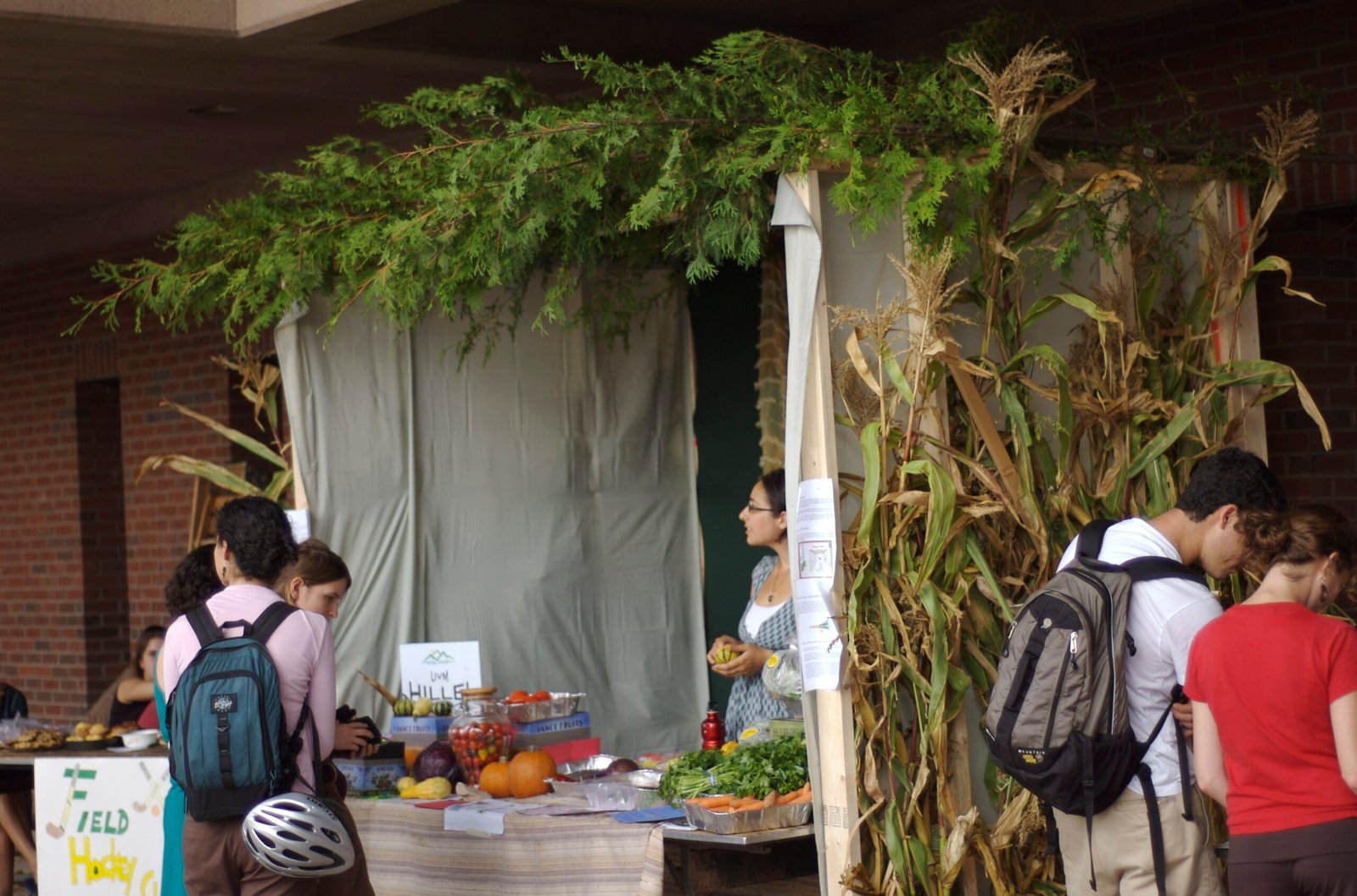
Begins Friday, September 25, 2026 at sunset and continues through Friday, October 2 at nightfall.
Come outside. Eat together. Look at the stars.
Remember creation. Remember the Exodus. Remember God’s provision. Remember that God desired to dwell among His people.
The Torah calls Israel to live in booths for seven days so later generations will remember that God made the people dwell in booths when He brought them out of Egypt. It also commands shared rejoicing. Read Leviticus 23:33-43 and Deuteronomy 16:13-15. Nehemiah 8:13-18 shows a later biblical observance in which the people gather branches, build booths, read Torah, and rejoice.
A simple way to begin
Build a sukkah if you can. If you cannot, do not let that become a barrier to participation.
The simplest doorway is a table outside. Use a patio, porch, backyard, deck, temporary canopy, or simple frame. Add branches or other natural material if practical. Sit outside. Eat. Invite people. Look at the sky.
This is an invitation to learn from the feast, not a claim that every substitute is identical to the biblical command given to Israel.
What makes a traditional sukkah
Jewish law contains detailed requirements, and communities consult competent teachers when building for traditional observance. At the most basic level, a sukkah is a temporary dwelling built beneath the open sky, with stable walls and a roof covering called sekhakh made from detached plant material. The covering provides more shade than sun while remaining recognizably temporary. A porch roof, tree canopy, or indoor tent does not simply become a traditional sukkah because it is decorated.
For a first encounter, choose one of these truthful options:
- Build a sukkah. Use a safe kit or plan, set it beneath open sky, and seek knowledgeable help if you want it to meet halakhic requirements.
- Visit a sukkah. Accept an invitation from a Jewish household or congregation and follow the host’s practice respectfully.
- Begin with an outdoor table. If you cannot build or visit, eat outside and use the readings in this guide. Call it an outdoor Sukkot learning meal, not a traditional sukkah.
Secure every structure against wind. Keep exits clear. Use battery-powered lights. Never place candles, heaters, grills, or hot serving appliances near branches, fabric, paper chains, or other combustible material. Follow local building, fire, rental, and condominium rules.
Prepare the space
- Add enough chairs and a stable table before decorating.
- Hang fruit, paper chains, children’s drawings, or harvest colors where they will not fall into food or flame.
- Put blankets in a basket and insect repellent away from food.
- Set a waterproof box with Bibles, napkins, and battery lights.
- Make a rain plan. Hospitality matters more than forcing guests to sit in dangerous weather.
- Place an empty chair or extra setting to remind the household to welcome someone beyond the usual circle.
Make room at the table
Invite friends, neighbors, family, someone who lives alone, someone who might otherwise eat alone, someone unable to repay the invitation, or someone who is simply curious about Scripture.
Deuteronomy presents the feast as shared rejoicing.
Make room at the table.
A 90-minute Sukkot supper
| Minutes | What happens |
|---|---|
| 0-15: Enter and notice | Welcome guests beneath the covering or to the outdoor table. Ask them to notice what feels temporary and what feels abundant. |
| 15-25: Read | Read Leviticus 23:39-43 and Deuteronomy 16:13-15. Let guests identify remembrance, dwelling, harvest, and shared joy. |
| 25-35: Explain | Distinguish the biblical command from later sukkah law, the Four Species, ushpizin, decorations, and your household’s simple practice. |
| 35-65: Eat | Serve a make-ahead harvest meal. Ask each guest to name one provision for which they are grateful. |
| 65-75: Welcome | Tell a story about being received as a guest. Ask whom the household can include or serve. |
| 75-85: See Jesus at the feast | Read John 7:37-39 in its chapter setting. Do not detach Jesus from the Jewish feast He attended. |
| 85-90: Rejoice | Pray. Sing if your group wishes. End with a concrete invitation to return during the week. |
Recipe card: Harvest lentil-and-rice stuffed peppers
Serves 6 | About 70 minutes | Vegan and gluten-free
Gather: 6 bell peppers, 2 tablespoons olive oil, 1 diced onion, 2 minced garlic cloves, 2 cups cooked brown or green lentils, 2 cups cooked rice, 1 can diced tomatoes drained, 1 teaspoon cumin, 1 teaspoon smoked paprika, 1/2 teaspoon cinnamon, 1 teaspoon salt, black pepper, 1/3 cup chopped parsley, 1 1/2 cups tomato sauce, and optional feta served separately.
- Heat the oven to 375 F. Cut the tops from the peppers and remove seeds. Stand them in a baking dish.
- Cook onion in olive oil for 6-8 minutes. Add garlic and spices for 30 seconds.
- Stir in lentils, rice, tomatoes, parsley, salt, and pepper.
- Spoon the filling into peppers. Pour tomato sauce around them and add 1/2 cup water to the dish.
- Cover and bake 35 minutes. Uncover and bake 15-20 minutes more, until peppers are tender and the center reaches 165 F.
Stuffed vegetables appear across many Jewish cuisines. Polish and Hungarian Jewish families may associate sweet-and-sour stuffed cabbage with Sukkot or Simchat Torah, while stuffed peppers, eggplant, zucchini, grape leaves, and other memulaim appear in Sephardi, Mizrahi, Israeli, and neighboring food traditions. A portable stuffed dish also keeps warmth and carries a whole meal into the sukkah. This recipe is MMAB’s accessible harvest version, not a claim of one ancient or universal festival recipe. See My Jewish Learning’s history of stuffed vegetables and its Sukkot stuffed-pumpkin discussion.
Recipe card: Roasted apple, squash, and carrot tray
Serves 8 | 15 minutes preparation plus 35 minutes roasting | Vegan and gluten-free
Gather: 1 peeled butternut squash cut into 1-inch cubes, 5 carrots cut into thick coins, 2 firm apples cut into wedges, 1 red onion cut into wedges, 3 tablespoons olive oil, 1 tablespoon honey or maple syrup, 1 teaspoon cinnamon, 1/2 teaspoon cumin, 1 teaspoon salt, black pepper, and chopped parsley.
- Heat the oven to 425 F. Line two rimmed baking sheets.
- Toss squash, carrots, onion, oil, sweetener, cinnamon, cumin, salt, and pepper. Spread in one layer.
- Roast 20 minutes. Add the apples, turn everything, and roast 12-15 minutes more until tender and browned.
- Add parsley before serving. Use maple syrup for a fully vegan dish.
This is a practical harvest dish that connects the sweetness of the earlier table with Sukkot’s abundance. It is not a prescribed holiday food.
Cultural windows around Sukkot
- Many Jewish families eat their meals in the sukkah; some spend far more of the week there. Climate, housing, health, local law, and communal practice affect what is possible.
- The Four Species are the etrog, lulav, myrtle, and willow identified in rabbinic tradition. They are taken and waved according to communal practice on festival days other than Shabbat.
- Many Ashkenazi tables feature stuffed cabbage, kugel, soups, and seasonal sweets. Sephardi and Mizrahi tables may feature stuffed vegetables, rice, fragrant herbs, stews, and local harvest produce. Families carry the cuisines of the lands in which they have lived.
- Some invite the symbolic ushpizin, honored biblical guests remembered on successive nights. Many contemporary households also emphasize actual hospitality, charitable giving, and care for creation.
- In Israel the opening festival day is observed differently from the two-day Diaspora pattern used by traditional communities outside Israel. Ask a local congregation which calendar and practice it follows.
These differences are not clutter around the feast. They are evidence that faithful communities have carried the appointed time through many lands, languages, climates, and generations.
Look at the lights God made
Turn off unnecessary patio lighting for a moment. Look upward.
Read Genesis 1:14-18, then Psalm 8, then Psalm 19:1-6.
Before our houses existed, those lights were there. Before our cities existed, those lights were there. Before our nations existed, God placed lights in the heavens.
We are sitting beneath the world He made. That alone is reason to give thanks.
Thank God for the lights in the sky, the night, creation, the earth beneath you, water, food, life, family, and the fact that He made a place where humanity could exist.
Seven Sukkot evenings
| Night | Read | Remember |
|---|---|---|
| 1 – Creation | Genesis 1:1-19; Psalm 8 | Look at what God made. |
| 2 – Abraham under the sky | Genesis 15:1-6 | Read God’s promise to Abraham while looking at the stars. |
| 3 – Leaving Egypt | Exodus 12:31-42 | God brought His people out. |
| 4 – God in the wilderness | Exodus 13:17-22; Exodus 16 | God guided and provided. |
| 5 – God dwelling among His people | Exodus 25:1-9; Exodus 40:34-38 | God desires to dwell among His people. |
| 6 – Rejoice before the LORD | Deuteronomy 16:13-15; Nehemiah 8:13-18 | Rejoice. |
| 7 – Jesus at the Feast | John 7 | Read the whole chapter. Jesus attends the Feast of Tabernacles and calls the thirsty to come to Him and drink. |
Jesus at the Feast
John 7 explicitly places Jesus at the Feast of Tabernacles. Read the whole chapter, not only the familiar verses.
Israel remembered wilderness provision. During the feast, Jesus stood and called the thirsty to come to Him and drink, and John explained His words in relation to the Spirit.
This is the kind of ancient context Modern Mind, Ancient Book exists to recover. The feast does not become Christian by erasing Israel. It helps followers of Jesus hear a Jewish Messiah speaking within Israel’s festival world.
A Sukkot prayer
Father, Creator of heaven and earth,
We look at the lights You placed in the heavens and remember that this world exists because You spoke.
Thank You for light. Thank You for darkness and rest. Thank You for the sun, moon, and stars. Thank You for this earth beneath our feet. Thank You for food. Thank You for water. Thank You for the people sitting around this table. Thank You for remembering mankind.
Thank You for bringing Israel out of Egypt and sheltering Your people through the wilderness. Thank You that You have always desired to dwell among Your people.
And thank You for Jesus, the light of the world.
Teach us to rejoice before You.
Amen.
Ready-to-use planning pages
One-week host checklist
- Choose your starting level and place the exact dates on the household calendar.
- Invite guests. Ask about allergies, dietary practice, mobility, children, and transportation.
- Choose one main reading, one shorter response reading, one recipe, and one prayer.
- Confirm whether you will sound a shofar, visit a congregation, fast, build or visit a sukkah, or host at an outdoor table.
- Buy ingredients and nonflammable lighting. Borrow rather than purchase specialty objects if appropriate.
- Print the reading order and assign no more than one or two paragraphs to each guest.
- Prepare make-ahead food and a weather plan.
- Clean the space without trying to make it look expensive.
- Send a reminder that tells guests what to expect and what they do not need to bring.
Shopping list for the recipes in this guide
Produce: 4-6 apples, 4 oranges, 2 pomegranates, 12 Medjool dates, 3 lemons, 3 onions, 1 red onion, 9 carrots, 3 celery stalks, garlic, 6 bell peppers, 1 butternut squash, scallions, parsley, mint or dill, and optional pistachios.
Pantry: Honey, olive oil, rice, dried or canned lentils, low-sodium broth, diced tomatoes, tomato sauce, chickpeas for the vegetarian soup, cumin, smoked paprika, cinnamon, thyme, bay leaf, salt, pepper, and maple syrup if desired.
Refrigerated: Chicken thighs for the soup, eggs, milk or nondairy milk, frozen spinach, and optional cheese or feta.
Table: Bread or round challah, grape juice or wine, water, and any familiar dishes your guests can eat.
Buy only for the recipes you choose. A feast should create gratitude and hospitality, not waste or financial pressure.
A note card for the table
Write these three lines where everyone can see them:
Scripture appoints. We begin with the biblical text.
Tradition remembers. We receive Jewish practice with gratitude and name its community and history.
Invitation welcomes. We take a faithful step without turning the feast into a test of salvation or an erasure of Israel.
A gracious script for unfamiliar moments
If someone asks, “Do I have to do this?” say:
We are here to learn from an appointed time God gave Israel and to understand the Bible and Jesus more deeply. We will tell you when something is in Scripture and when it is a later tradition. You are welcome to participate, observe, ask, or pass without embarrassment.
If someone asks, “Are we pretending to be Jewish?” say:
No. We are honoring the Jewish setting of Scripture and learning from practices Jewish communities have preserved. We will not claim an identity that is not ours, and we will not erase Israel from its own story.
If a Jewish guest explains that their family practices differently, say:
Thank you. This guide cannot represent every family or community. We would be honored to hear how your people have carried the day.
A first-year observance at a glance
Yom Teruah
Read Scripture. Pray. Blow the shofar if available. Ask God to awaken you. Light candles or eat apples and honey if you wish, while naming them as later Jewish traditions rather than Torah commands.
The days between
Read one passage each day. Pray. Fast some if appropriate. Apologize. Forgive. Correct wrongs. Return what is not yours. Pay what you owe. Reach out to people you love. Turn toward God.
Yom Kippur
Stop. Fast if able. Read Leviticus 16. Read Hebrews 9-10. Confess. Rest. Hope.
Sukkot
Put a table outside. Build a temporary shelter if you can. Add branches. Invite someone. Eat good food. Look upward. Thank God for creation, Israel, His provision, and His Son. Rejoice.
Come join us to remember and enjoy
You do not have to master the feast before you begin learning from it.
Sometimes the best way to understand an ancient command is to stop merely reading about it – and walk into it.
Our people celebrate this way. Come join us to remember and enjoy.
Walk the Way – Modern Mind, Ancient Book.
Free resources and source notes
- Free printable: Download the 2026 Fall Appointed Times Quick Guide (PDF).
- Keep learning: Receive future free guides and teachings from Modern Mind, Ancient Book.
- Calendar: Hebcal Jewish Holidays 2026.
- Rabbinic Shabbat-shofar source: Mishnah Rosh Hashanah 4:1.
- Rosh Hashanah food traditions and cultural variation: Reform Judaism – More Than Apples and Honey, What Goes on the Rosh Hashanah Seder Plate?, and Chabad – Sephardic Simanim.
- Contemporary Jewish Yom Kippur practice: Chabad – How to Celebrate Yom Kippur.
- Break-fast cultural examples: My Jewish Learning – One-Pot High Holiday Cookbook.
- Sukkot home practice and cultural variation: Chabad – How to Celebrate Sukkot, Reform Judaism – Sukkot Customs and Rituals, My Jewish Learning – Stuffed Pumpkin, and The Long, Delicious Jewish History of Stuffed Vegetables.
- Columbia-area invitation: Gates to Zion Ministries and its 2026 Calendar of Events.
- Sukkot documentary photograph: Justin Henry, Sukkah, September 26, 2007, Wikimedia Commons, CC BY 2.0.
Scripture references are presented using the Berean Standard Bible as Modern Mind, Ancient Book’s primary public translation. This article mainly points readers to full passages rather than reproducing them.
The Yom Teruah and Yom Kippur hero artwork used with this resource is MMAB visual synthesis, not an ancient reconstruction or documentary photograph. The Sukkot image is a rights-cleared documentary photograph and is credited separately.