
Leviticus can feel far from the questions we carry. Yet it begins with a question that reaches into ordinary life: how will a redeemed people live with God’s presence among them?
At the end of Exodus, God’s glory fills the tabernacle (Exodus 40:34–38). Leviticus begins from there. The offerings, priesthood, and Day of Atonement speak to drawing near to God. The book then carries holiness into the way people treat one another.
Holiness reaches our neighbors
Leviticus 19 speaks about honest dealings, care for the vulnerable, and love of neighbor. Jesus takes up that command when he teaches the greatest commandments (Mark 12:28–34). Worship and justice are not disconnected subjects in this story.
We made this survey for you if Leviticus has felt difficult to enter. It follows the book’s movement from God’s presence and atonement into daily life without asking you to pretend that every ancient instruction is simple.
Watch our Leviticus survey on YouTube
Read with us
- Exodus 40:34–38 — notice the presence of God at the end of Exodus.
- Leviticus 1:1 — notice where the next book begins.
- Leviticus 19:9–18 — notice what holiness asks of us in the way we treat a neighbor.
As you read, consider this: how do drawing near to God and caring for the person beside us belong to the same story?
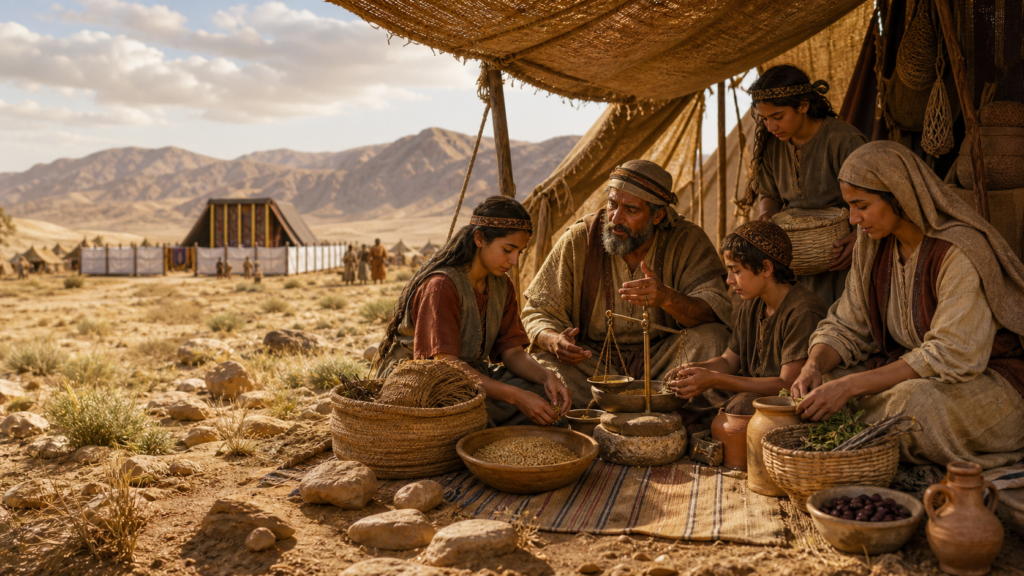
The artwork is an interpretive illustration, not an archaeological reconstruction.